The query has to be between 2 and 50 characters

Advertisement
Advertisement

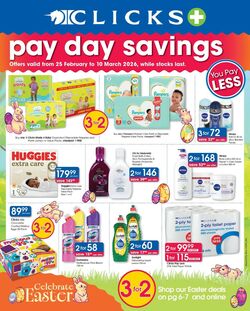
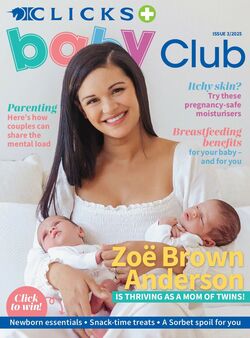
Current special Clicks - Valid from 25.02 to 05.03 - Page nb 29

Advertisement
Advertisement
Advertisement
Advertisement
Special Clicks 25.02.2026 - 05.03.2026
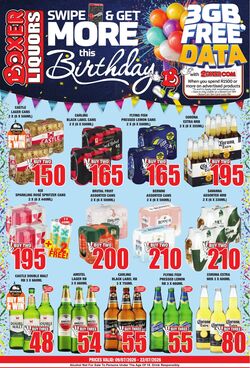
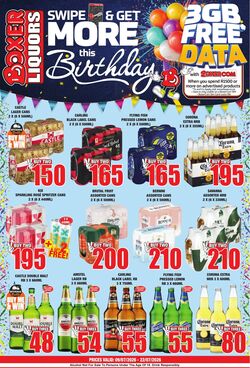
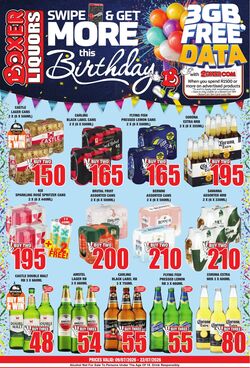
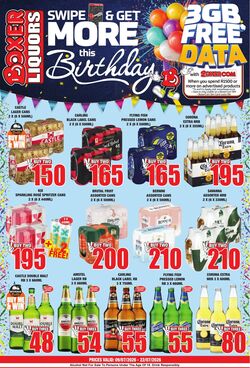
Special Boxer - GP May ME Liquor Special Stores 25 May, 2026 - 7 Jun, 2026
Boxer - GP May ME Liquor Special Stores
25 May, 2026 - 7 Jun, 2026
Special Boxer - Atlyn Mall Liquor Grand Opening 25 May, 2026 - 7 Jun, 2026
Boxer - Atlyn Mall Liquor Grand Opening
25 May, 2026 - 7 Jun, 2026
Special Boxer - Atlyn Mall Liquor Grand Opening 22 May, 2026 - 7 Jun, 2026
Boxer - Atlyn Mall Liquor Grand Opening
22 May, 2026 - 7 Jun, 2026
Special Game - Game SASSA : Get More iGroza For Your Buck (25 May - 08 June 2026) — www.guzzle.co.za 25 May, 2026 - 8 Jun, 2026
Game - Game SASSA : Get More iGroza For Your Buck (25 May - 08 June 2026) — www.guzzle.co.za
25 May, 2026 - 8 Jun, 2026
See next flyer
Advertisement
Advertisement
Advertisement

Products in this catalogue

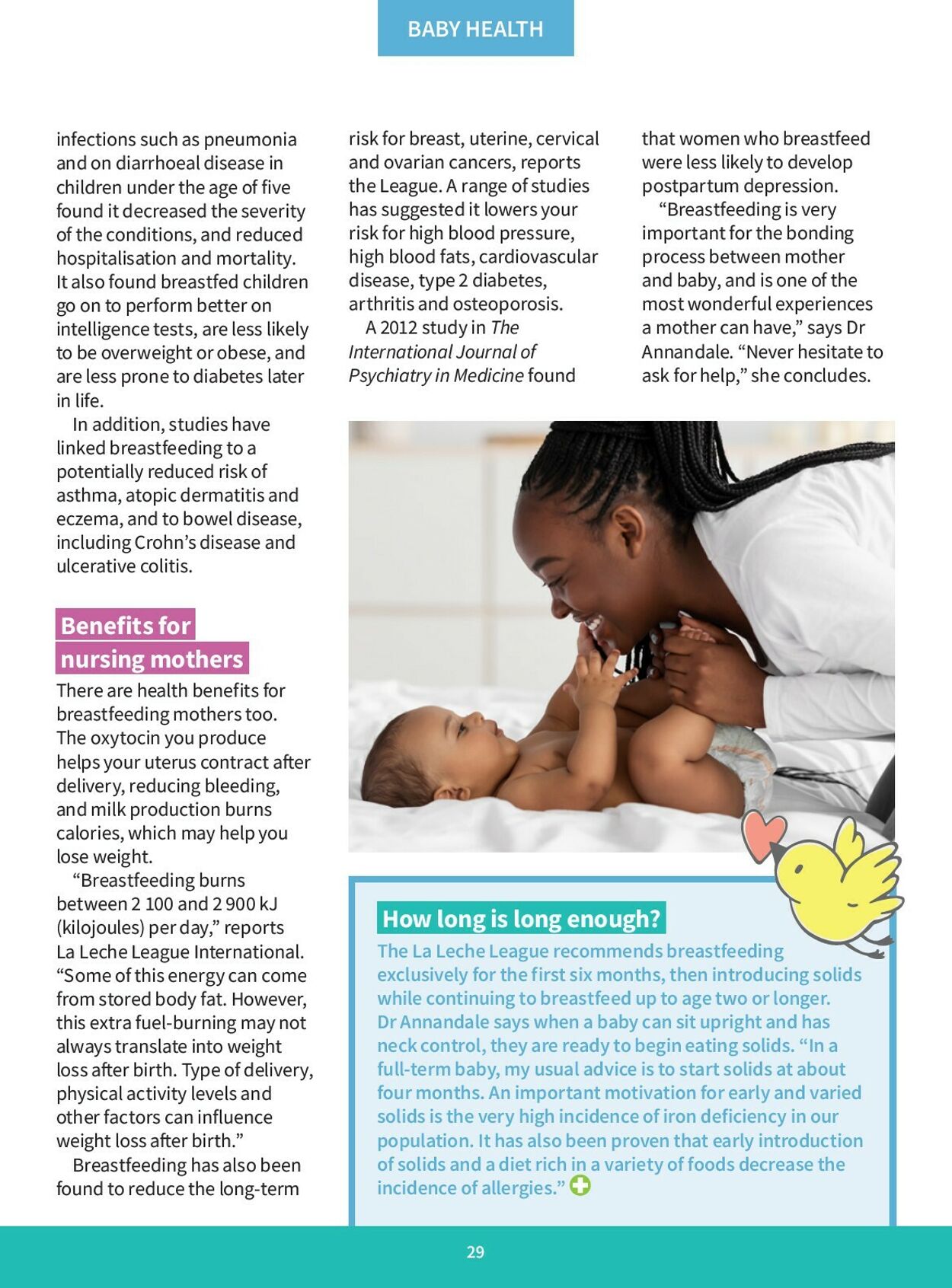
infections such as pneumonia and on diarrhoeal disease in children under the age of five found it decreased the severity of the conditions, and reduced hospitalisation and mortality. It also found breastfed children go on to perform better on intelligence tests, are less likely to be overweight or obese, and are less prone to diabetes later in life. In addition, studies have linked breastfeeding toa potentially reduced risk of asthma, atopic dermatitis and eczema, and to bowel disease, including Crohn’s disease and ulcerative colitis. Eels There are health benefits for breastfeeding mothers too. The oxytocin you produce helps your uterus contract after delivery, reducing bleeding, and milk production burns calories, which may help you lose weight. “Breastfeeding burns between 2 100 and 2900 kJ (kilojoules) per day,” reports La Leche League International. “Some of this energy can come from stored body fat. However, this extra fuel-burning may not always translate into weight loss after birth. Type of delivery, physical activity levels and other factors can influence weight loss after birth.” Breastfeeding has also been found to reduce the long-term BABY HEALTH risk for breast, uterine, cervical and ovarian cancers, reports the League. A range of studies has suggested it lowers your risk for high blood pressure, high blood fats, cardiovascular disease, type 2 diabetes, arthritis and osteoporosis. A 2012 study in The International Journal of Psychiatry in Medicine found that women who breastfeed were less likely to develop postpartum depression. “Breastfeeding is very important for the bonding process between mother and baby, and is one of the most wonderful experiences a mother can have,” says Dr Annandale. “Never hesitate to ask for help,” she concludes. incidence of allergies.” ACL EM COLL ik The La Leche League recommends breastfeeding exclusively for the first six months, then introducing solids while continuing to breastfeed up to age two or longer. Dr Annandale says when a baby can sit upright and has neck control, they are ready to begin eating solids. “Ina full-term baby, my usual advice is to start solids at about four months. An important motivation for early and varied solids is the very high incidence of iron deficiency in our population. It has also been proven that early introduction of solids and a diet rich in a variety of foods decrease the


Latest specials

Advertisement
infections such as pneumonia and on diarrhoeal disease in children under the age of five found it decreased the severity of the conditions, and reduced hospitalisation and mortality. It also found breastfed children go on to perform better on intelligence tests, are less likely to be overweight or obese, and are less prone to diabetes later in life. In addition, studies have linked breastfeeding toa potentially reduced risk of asthma, atopic dermatitis and eczema, and to bowel disease, including Crohn’s disease and ulcerative colitis. Eels There are health benefits for breastfeeding mothers too. The oxytocin you produce helps your uterus contract after delivery, reducing bleeding, and milk production burns calories, which may help you lose weight. “Breastfeeding burns between 2 100 and 2900 kJ (kilojoules) per day,” reports La Leche League International. “Some of this energy can come from stored body fat. However, this extra fuel-burning may not always translate into weight loss after birth. Type of delivery, physical activity levels and other factors can influence weight loss after birth.” Breastfeeding has also been found to reduce the long-term BABY HEALTH risk for breast, uterine, cervical and ovarian cancers, reports the League. A range of studies has suggested it lowers your risk for high blood pressure, high blood fats, cardiovascular disease, type 2 diabetes, arthritis and osteoporosis. A 2012 study in The International Journal of Psychiatry in Medicine found that women who breastfeed were less likely to develop postpartum depression. “Breastfeeding is very important for the bonding process between mother and baby, and is one of the most wonderful experiences a mother can have,” says Dr Annandale. “Never hesitate to ask for help,” she concludes. incidence of allergies.” ACL EM COLL ik The La Leche League recommends breastfeeding exclusively for the first six months, then introducing solids while continuing to breastfeed up to age two or longer. Dr Annandale says when a baby can sit upright and has neck control, they are ready to begin eating solids. “Ina full-term baby, my usual advice is to start solids at about four months. An important motivation for early and varied solids is the very high incidence of iron deficiency in our population. It has also been proven that early introduction of solids and a diet rich in a variety of foods decrease the
Advertisement
Advertisement

If you continue to browse this website, you accept the use of cookies.

Name Details