The query has to be between 2 and 50 characters
















Products in this catalogue
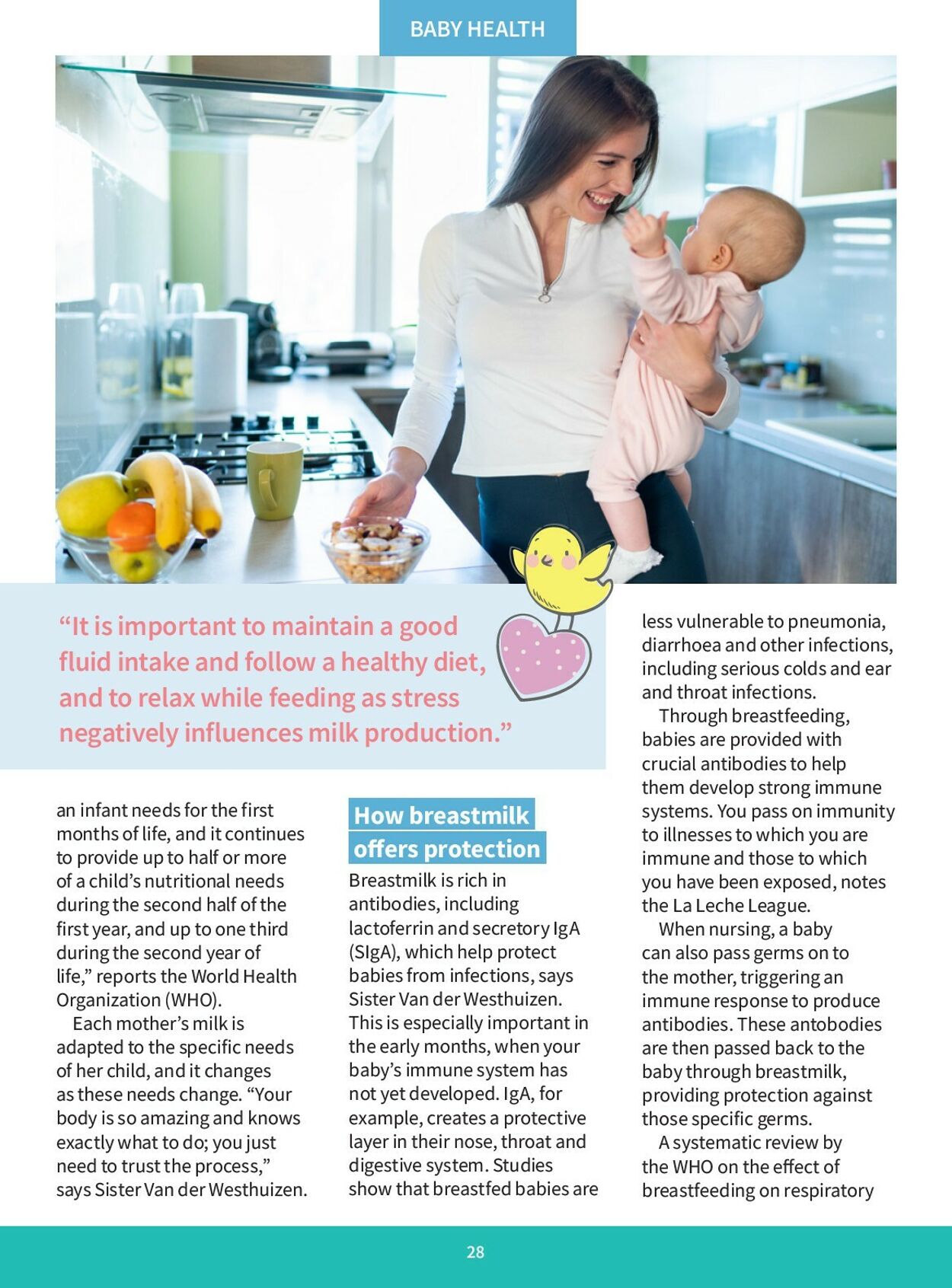
“It is important to maintain a good fluid intake and follow a healthy diet, and to relax while feeding as stress negatively influences milk production.” an infant needs for the first months of life, and it continues to provide up to half or more of acchild’s nutritional needs during the second half of the first year, and up to one third during the second year of life,” reports the World Health Organization (WHO). Each mother’s milk is adapted to the specific needs of her child, and it changes as these needs change. “Your body is so amazing and knows exactly what to do; you just need to trust the process,” says Sister Van der Westhuizen. ese us offers protection Breastmilk is rich in antibodies, including lactoferrin and secretory IgA (SIgA), which help protect babies from infections, says Sister Van der Westhuizen. This is especially important in the early months, when your baby’s immune system has not yet developed. IgA, for example, creates a protective layer in their nose, throat and digestive system. Studies show that breastfed babies are less vulnerable to pneumonia, diarrhoea and other infections, including serious colds and ear and throat infections. Through breastfeeding, babies are provided with crucial antibodies to help them develop strong immune systems. You pass on immunity to illnesses to which you are immune and those to which you have been exposed, notes the La Leche League. When nursing, a baby can also pass germs on to the mother, triggering an immune response to produce antibodies. These antobodies are then passed back to the baby through breastmilk, providing protection against those specific germs. Asystematic review by the WHO on the effect of breastfeeding on respiratory












| Name | Details |
|---|