The query has to be between 2 and 50 characters













Products in this catalogue
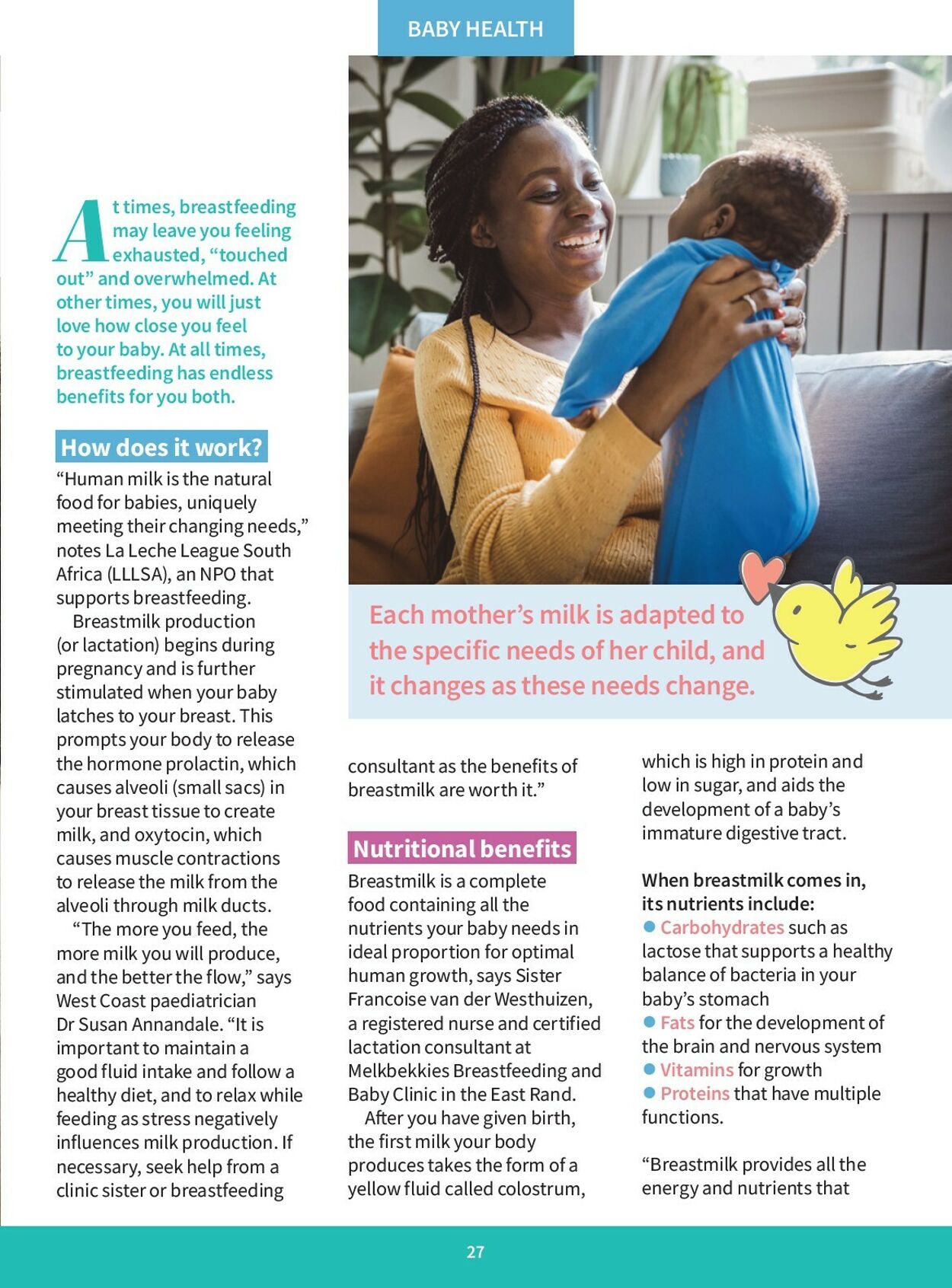
Ay ttimes, breastfeeding [ may leave you feeling exhausted, “touched and ov other times, you wil love how close you to your baby. At all times, “Human milk is the natural food for babies, uniquely meeting their changing needs,” notes La Leche League South Africa (LLLSA), an NPO that supports breastfeeding. Breastmilk production (or lactation) begins during pregnancy and is further stimulated when your baby latches to your breast. This prompts your body to release the hormone prolactin, which causes alveoli (small sacs) in your breast tissue to create milk, and oxytocin, which causes muscle contractions to release the milk from the alveoli through milk ducts. “The more you feed, the more milk you will produce, and the better the flow,” says West Coast paediatrician Dr Susan Annandale. “It is important to maintain a good fluid intake and follow a healthy diet, and to relax while feeding as stress negatively influences milk production. If necessary, seek help from a clinic sister or breastfeeding consultant as the benefits of breastmilk are worth it.” Breastmilk is a complete food containing all the nutrients your baby needs in ideal proportion for optimal human growth, says Sister Francoise van der Westhuizen, a registered nurse and certified lactation consultant at Melkbekkies Breastfeeding and Baby Clinic in the East Rand. After you have given birth, the first milk your body produces takes the form of a yellow fluid called colostrum, Each mother’s milk is adapted to SS the specific needs of her child, and = it changes as these needs change. which is high in protein and low in sugar, and aids the development of a baby’s immature digestive tract. When breastmilk comes in, its nutrients include: Carbohydrates such as lactose that supports a healthy balance of bacteria in your baby’s stomach Fats for the development of the brain and nervous system Vitamins for growth Proteins that have multiple functions. “Breastmilk provides all the energy and nutrients that












| Name | Details |
|---|