The query has to be between 2 and 50 characters

Advertisement
Advertisement

Current special Clicks - Valid from 25.02 to 05.03 - Page nb 33

Advertisement
Advertisement
Advertisement
Advertisement
Special Clicks 25.02.2026 - 05.03.2026
Special Boxer - GP May ME Special Stores 25 May, 2026 - 7 Jun, 2026
Boxer - GP May ME Special Stores
25 May, 2026 - 7 Jun, 2026
Special Boxer - Atlyn Mall Liquor Grand Opening 25 May, 2026 - 7 Jun, 2026
Boxer - Atlyn Mall Liquor Grand Opening
25 May, 2026 - 7 Jun, 2026
Special Boxer - Atlyn Mall Liquor Grand Opening 22 May, 2026 - 7 Jun, 2026
Boxer - Atlyn Mall Liquor Grand Opening
22 May, 2026 - 7 Jun, 2026
Special Boxer - GP May ME Special Stores 25 May, 2026 - 7 Jun, 2026
Boxer - GP May ME Special Stores
25 May, 2026 - 7 Jun, 2026
See next flyer
Advertisement
Advertisement
Advertisement

Products in this catalogue

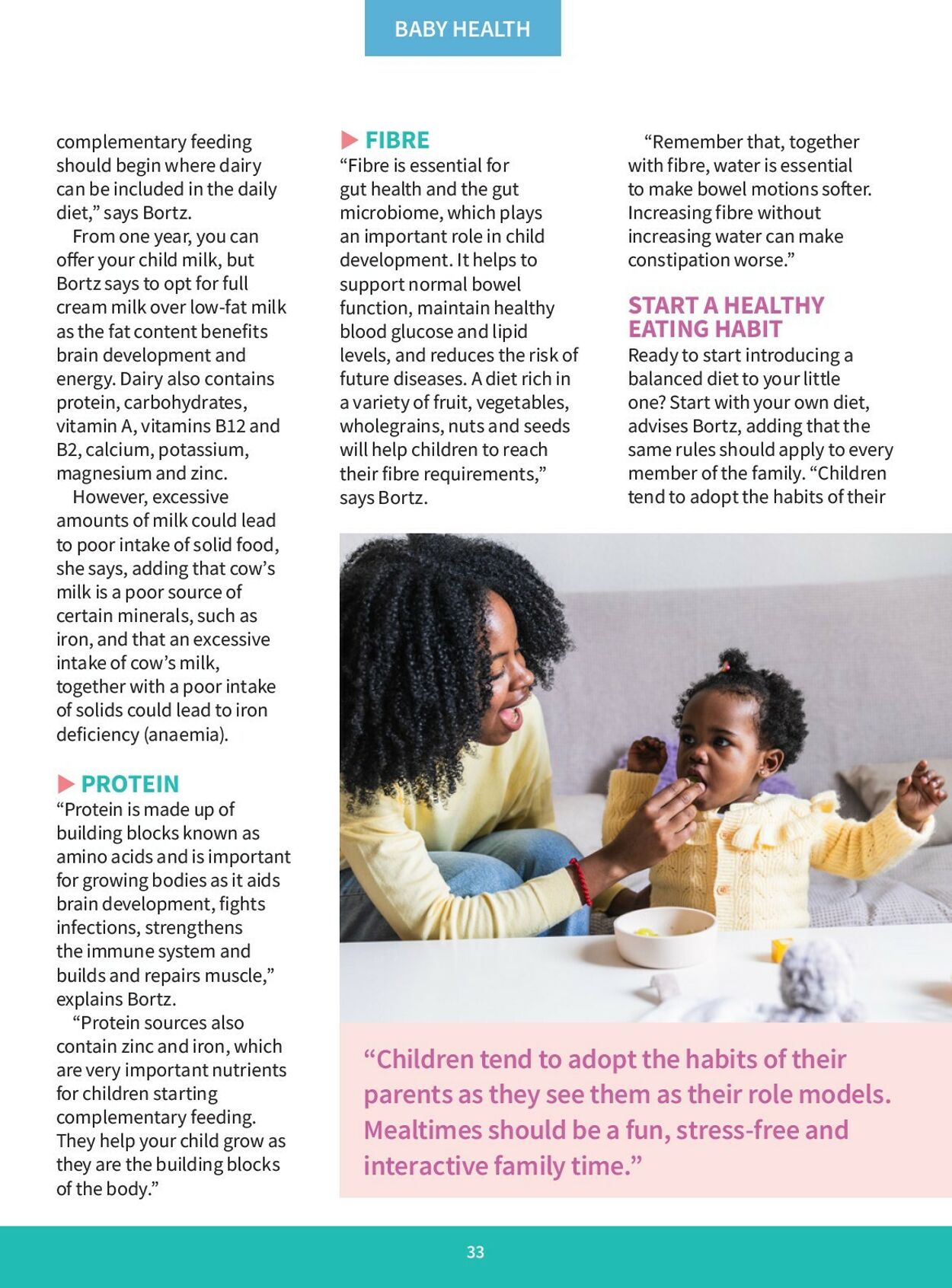
complementary feeding should begin where dairy can be included in the daily diet,” says Bortz. From one year, you can offer your child milk, but Bortz says to opt for full cream milk over low-fat milk as the fat content benefits brain development and energy. Dairy also contains protein, carbohydrates, vitamin A, vitamins B12 and B2, calcium, potassium, magnesium and zinc. However, excessive amounts of milk could lead to poor intake of solid food, she says, adding that cow’s milk is a poor source of certain minerals, such as iron, and that an excessive intake of cow’s milk, together with a poor intake of solids could lead to iron deficiency (anaemia). > PROTEIN “Protein is made up of building blocks known as amino acids and is important for growing bodies as it aids brain development, fights infections, strengthens the immune system and builds and repairs muscle,” explains Bortz. “Protein sources also contain zinc and iron, which are very important nutrients for children starting complementary feeding. They help your child grow as they are the building blocks of the body.” BABY HEA > FIBRE “Fibre is essential for gut health and the gut microbiome, which plays an important role in child development. It helps to support normal bowel function, maintain healthy blood glucose and lipid levels, and reduces the risk of future diseases. A diet rich in avariety of fruit, vegetables, wholegrains, nuts and seeds will help children to reach their fibre requirements,” says Bortz. “Remember that, together with fibre, water is essential to make bowel motions softer. Increasing fibre without increasing water can make constipation worse.” START A HEALTHY EATING HABIT Ready to start introducing a balanced diet to your little one? Start with your own diet, advises Bortz, adding that the same rules should apply to every member of the family. “Children tend to adopt the habits of their “Children tend to adopt the habits of their parents as they see them as their role models. Mealtimes should be a fun, stress-free and interactive family time.”


Latest specials

Advertisement
complementary feeding should begin where dairy can be included in the daily diet,” says Bortz. From one year, you can offer your child milk, but Bortz says to opt for full cream milk over low-fat milk as the fat content benefits brain development and energy. Dairy also contains protein, carbohydrates, vitamin A, vitamins B12 and B2, calcium, potassium, magnesium and zinc. However, excessive amounts of milk could lead to poor intake of solid food, she says, adding that cow’s milk is a poor source of certain minerals, such as iron, and that an excessive intake of cow’s milk, together with a poor intake of solids could lead to iron deficiency (anaemia). > PROTEIN “Protein is made up of building blocks known as amino acids and is important for growing bodies as it aids brain development, fights infections, strengthens the immune system and builds and repairs muscle,” explains Bortz. “Protein sources also contain zinc and iron, which are very important nutrients for children starting complementary feeding. They help your child grow as they are the building blocks of the body.” BABY HEA > FIBRE “Fibre is essential for gut health and the gut microbiome, which plays an important role in child development. It helps to support normal bowel function, maintain healthy blood glucose and lipid levels, and reduces the risk of future diseases. A diet rich in avariety of fruit, vegetables, wholegrains, nuts and seeds will help children to reach their fibre requirements,” says Bortz. “Remember that, together with fibre, water is essential to make bowel motions softer. Increasing fibre without increasing water can make constipation worse.” START A HEALTHY EATING HABIT Ready to start introducing a balanced diet to your little one? Start with your own diet, advises Bortz, adding that the same rules should apply to every member of the family. “Children tend to adopt the habits of their “Children tend to adopt the habits of their parents as they see them as their role models. Mealtimes should be a fun, stress-free and interactive family time.”

Advertisement
Advertisement

If you continue to browse this website, you accept the use of cookies.

Name Details