The query has to be between 2 and 50 characters











Products in this catalogue
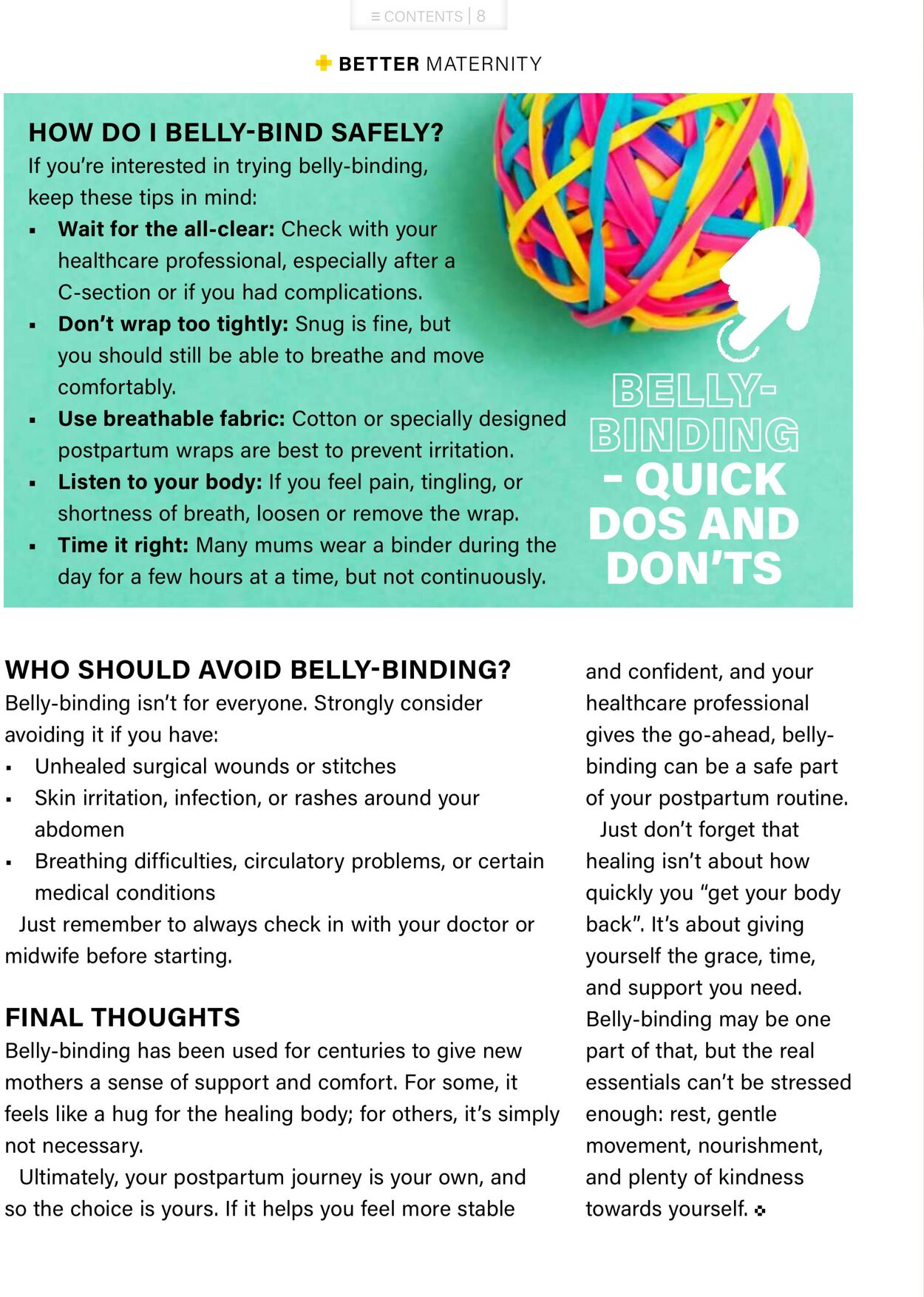
*» BETTER MATERNITY % HOW DO |! BELLY-BIND SAFELY? If you're interested in trying belly-binding, keep these tips in mind: » Wait for the all-clear: Check with your healthcare professional, especially after C-section or if you had complications. » Don’t wrap too tightly: Snug is fine, but you should still be able to breathe and move comfortably. » Use breathable fabric: Cotton or specially designed postpartum wraps are best to prevent irritation. » Listen to your body: If you feel pain, tingling, or shortness of breath, loosen or remove the wrap. * Time it right: Many mums wear a binder during the day for a few hours at a time, but not continuously. WHO SHOULD AVOID BELLY-BINDING? Belly-binding isn’t for everyone. Strongly consider avoiding it if you have: » Unhealed surgical wounds or stitches Skin irritation, infection, or rashes around your abdomen Breathing difficulties, circulatory problems, or certain medical conditions Just remember to always check in with your doctor or midwife before starting. FINAL THOUGHTS Belly-binding has been used for centuries to give new mothers a sense of support and comfort. For some, it feels like a hug for the healing body; for others, it's simply not necessary. Ultimately, your postpartum journey is your own, and so the choice is yours. If it helps you feel more stable and confident, and your healthcare professional gives the go-ahead, belly- binding can be a safe part of your postpartum routine. Just don’t forget that healing isn't about how quickly you “get your body back”. It's about giving yourself the grace, time, and support you need. Belly-binding may be one part of that, but the real essentials can’t be stressed enough: rest, gentle movement, nourishment, and plenty of kindness towards yourself. +












| Name | Details |
|---|