The query has to be between 2 and 50 characters









Products in this catalogue
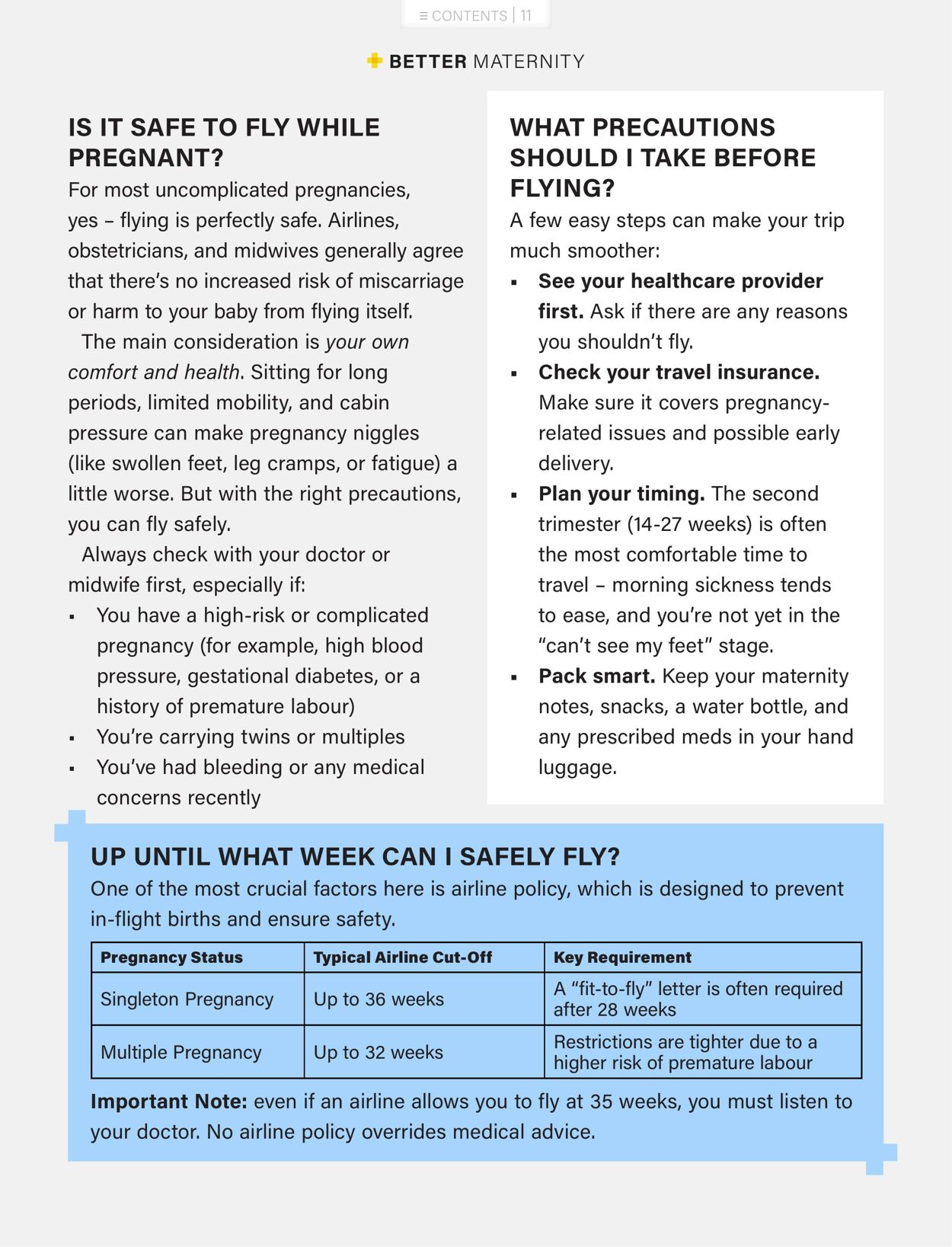
*» BETTER MATERNITY IS IT SAFE TO FLY WHILE PREGNANT? For most uncomplicated pregnancies, yes - flying is perfectly safe. Airlines, WHAT PRECAUTIONS SHOULD | TAKE BEFORE FLYING? A few easy steps can make your trip obstetricians, and midwives generally agree that there’s no increased risk of miscarriage . or harm to your baby from flying itself. The main consideration is your own comfort and health. Sitting for long . periods, limited mobility, and cabin pressure can make pregnancy niggles (like swollen feet, leg cramps, or fatigue) a little worse. But with the right precautions, . you can fly safely. Always check with your doctor or midwife first, especially if: You have a high-risk or complicated pregnancy (for example, high blood pressure, gestational diabetes, or a . history of premature labour) You're carrying twins or multiples You've had bleeding or any medical concerns recently much smoother: See your healthcare provider first. Ask if there are any reasons you shouldn't fly. Check your travel insurance. Make sure it covers pregnancy- related issues and possible early delivery. Plan your timing. The second trimester (14-27 weeks) is often the most comfortable time to travel - morning sickness tends to ease, and you're not yet in the “can't see my feet” stage. Pack smart. Keep your maternity notes, snacks, a water bottle, and any prescribed meds in your hand luggage. UP UNTIL WHAT WEEK CAN | SAFELY FLY? One of the most crucial factors here is airline policy, which is designed to prevent in-flight births and ensure safety. Pregnancy Status Typical Airline Cut-Off Key Requirement Singleton Pregnancy Up to 36 weeks A "fit-to-fly” letter is often required after 28 weeks Multiple Pregnancy Up to 32 weeks Restrictions are tighter due to a higher risk of premature labour Important Note: even if an airline allows you to fly at 35 weeks, you must listen to your doctor. No airline policy overrides medical advice.












| Name | Details |
|---|