The query has to be between 2 and 50 characters

Advertisement
Advertisement

Current special Baby City - Valid from 01.06 to 30.06 - Page nb 34

Advertisement
Advertisement
Advertisement
Advertisement
Special Baby City 01.06.2025 - 30.06.2025
Special Boxer - GP May ME Special Stores 25 May, 2026 - 7 Jun, 2026
Boxer - GP May ME Special Stores
25 May, 2026 - 7 Jun, 2026
Special Boxer - Atlyn Mall Liquor Grand Opening 22 May, 2026 - 7 Jun, 2026
Boxer - Atlyn Mall Liquor Grand Opening
22 May, 2026 - 7 Jun, 2026
Special Boxer - GP May ME Liquor 25 May, 2026 - 7 Jun, 2026
Boxer - GP May ME Liquor
25 May, 2026 - 7 Jun, 2026
Special Boxer - GP May ME Special Stores 25 May, 2026 - 7 Jun, 2026
Boxer - GP May ME Special Stores
25 May, 2026 - 7 Jun, 2026
See next flyer
Advertisement
Advertisement
Advertisement

Products in this catalogue

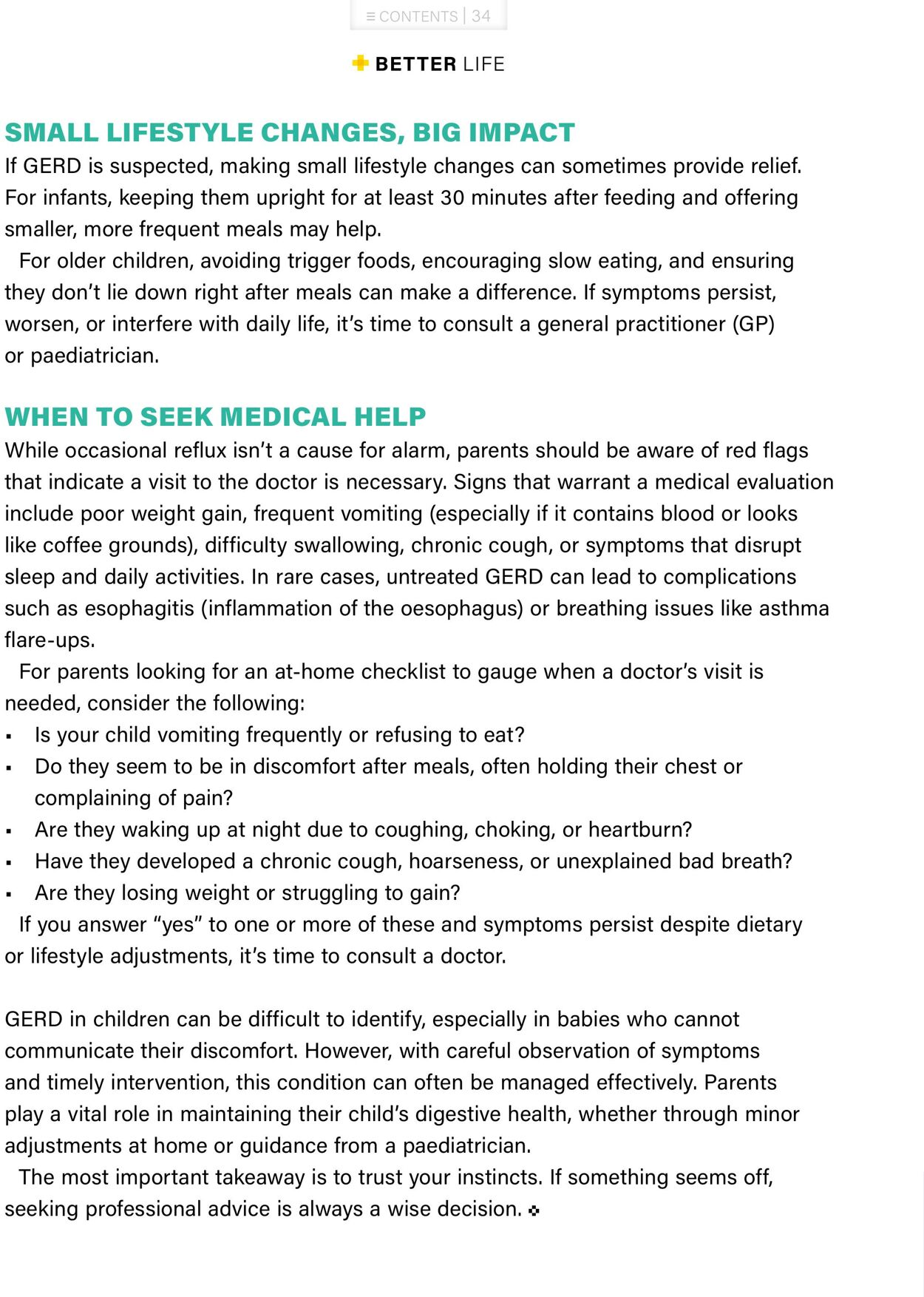
“» BETTER LIFE SMALL LIFESTYLE CHANGES, BIG IMPACT If GERD is suspected, making small lifestyle changes can sometimes provide relief. For infants, keeping them upright for at least 30 minutes after feeding and offering smaller, more frequent meals may help. For older children, avoiding trigger foods, encouraging slow eating, and ensuring they don't lie down right after meals can make a difference. If symptoms persist, worsen, or interfere with daily life, it's time to consult a general practitioner (GP) or paediatrician. WHEN TO SEEK MEDICAL HELP While occasional reflux isn’t a cause for alarm, parents should be aware of red flags that indicate a visit to the doctor is necessary. Signs that warrant a medical evaluation include poor weight gain, frequent vomiting (especially if it contains blood or looks like coffee grounds), difficulty swallowing, chronic cough, or symptoms that disrupt sleep and daily activities. In rare cases, untreated GERD can lead to complications such as esophagitis (inflammation of the oesophagus) or breathing issues like asthma flare-ups. For parents looking for an at-home checklist to gauge when a doctor's visit is needed, consider the following: Is your child vomiting frequently or refusing to eat? « Do they seem to be in discomfort after meals, often holding their chest or complaining of pain? Are they waking up at night due to coughing, choking, or heartburn? Have they developed a chronic cough, hoarseness, or unexplained bad breath? » Are they losing weight or struggling to gain? If you answer “yes” to one or more of these and symptoms persist despite dietary or lifestyle adjustments, it's time to consult a doctor. GERD in children can be difficult to identify, especially in babies who cannot communicate their discomfort. However, with careful observation of symptoms and timely intervention, this condition can often be managed effectively. Parents play a vital role in maintaining their child's digestive health, whether through minor adjustments at home or guidance from a paediatrician. The most important takeaway is to trust your instincts. If something seems off, seeking professional advice is always a wise decision.


Latest specials

Advertisement
“» BETTER LIFE SMALL LIFESTYLE CHANGES, BIG IMPACT If GERD is suspected, making small lifestyle changes can sometimes provide relief. For infants, keeping them upright for at least 30 minutes after feeding and offering smaller, more frequent meals may help. For older children, avoiding trigger foods, encouraging slow eating, and ensuring they don't lie down right after meals can make a difference. If symptoms persist, worsen, or interfere with daily life, it's time to consult a general practitioner (GP) or paediatrician. WHEN TO SEEK MEDICAL HELP While occasional reflux isn’t a cause for alarm, parents should be aware of red flags that indicate a visit to the doctor is necessary. Signs that warrant a medical evaluation include poor weight gain, frequent vomiting (especially if it contains blood or looks like coffee grounds), difficulty swallowing, chronic cough, or symptoms that disrupt sleep and daily activities. In rare cases, untreated GERD can lead to complications such as esophagitis (inflammation of the oesophagus) or breathing issues like asthma flare-ups. For parents looking for an at-home checklist to gauge when a doctor's visit is needed, consider the following: Is your child vomiting frequently or refusing to eat? « Do they seem to be in discomfort after meals, often holding their chest or complaining of pain? Are they waking up at night due to coughing, choking, or heartburn? Have they developed a chronic cough, hoarseness, or unexplained bad breath? » Are they losing weight or struggling to gain? If you answer “yes” to one or more of these and symptoms persist despite dietary or lifestyle adjustments, it's time to consult a doctor. GERD in children can be difficult to identify, especially in babies who cannot communicate their discomfort. However, with careful observation of symptoms and timely intervention, this condition can often be managed effectively. Parents play a vital role in maintaining their child's digestive health, whether through minor adjustments at home or guidance from a paediatrician. The most important takeaway is to trust your instincts. If something seems off, seeking professional advice is always a wise decision.

Advertisement
Advertisement

If you continue to browse this website, you accept the use of cookies.

Name Details