The query has to be between 2 and 50 characters

Advertisement
Advertisement

Current special Baby City - Valid from 01.06 to 30.06 - Page nb 33

Advertisement
Advertisement
Advertisement
Advertisement
Special Baby City 01.06.2025 - 30.06.2025
Special Boxer - Atlyn Mall Liquor Grand Opening 25 May, 2026 - 7 Jun, 2026
Boxer - Atlyn Mall Liquor Grand Opening
25 May, 2026 - 7 Jun, 2026
Special Boxer - Atlyn Mall Liquor Grand Opening 25 May, 2026 - 7 Jun, 2026
Boxer - Atlyn Mall Liquor Grand Opening
25 May, 2026 - 7 Jun, 2026
Special Boxer - Atlyn Mall Liquor Grand Opening 22 May, 2026 - 7 Jun, 2026
Boxer - Atlyn Mall Liquor Grand Opening
22 May, 2026 - 7 Jun, 2026
Special Boxer - Atlyn Mall Liquor Grand Opening 22 May, 2026 - 7 Jun, 2026
Boxer - Atlyn Mall Liquor Grand Opening
22 May, 2026 - 7 Jun, 2026
See next flyer
Advertisement
Advertisement
Advertisement

Products in this catalogue

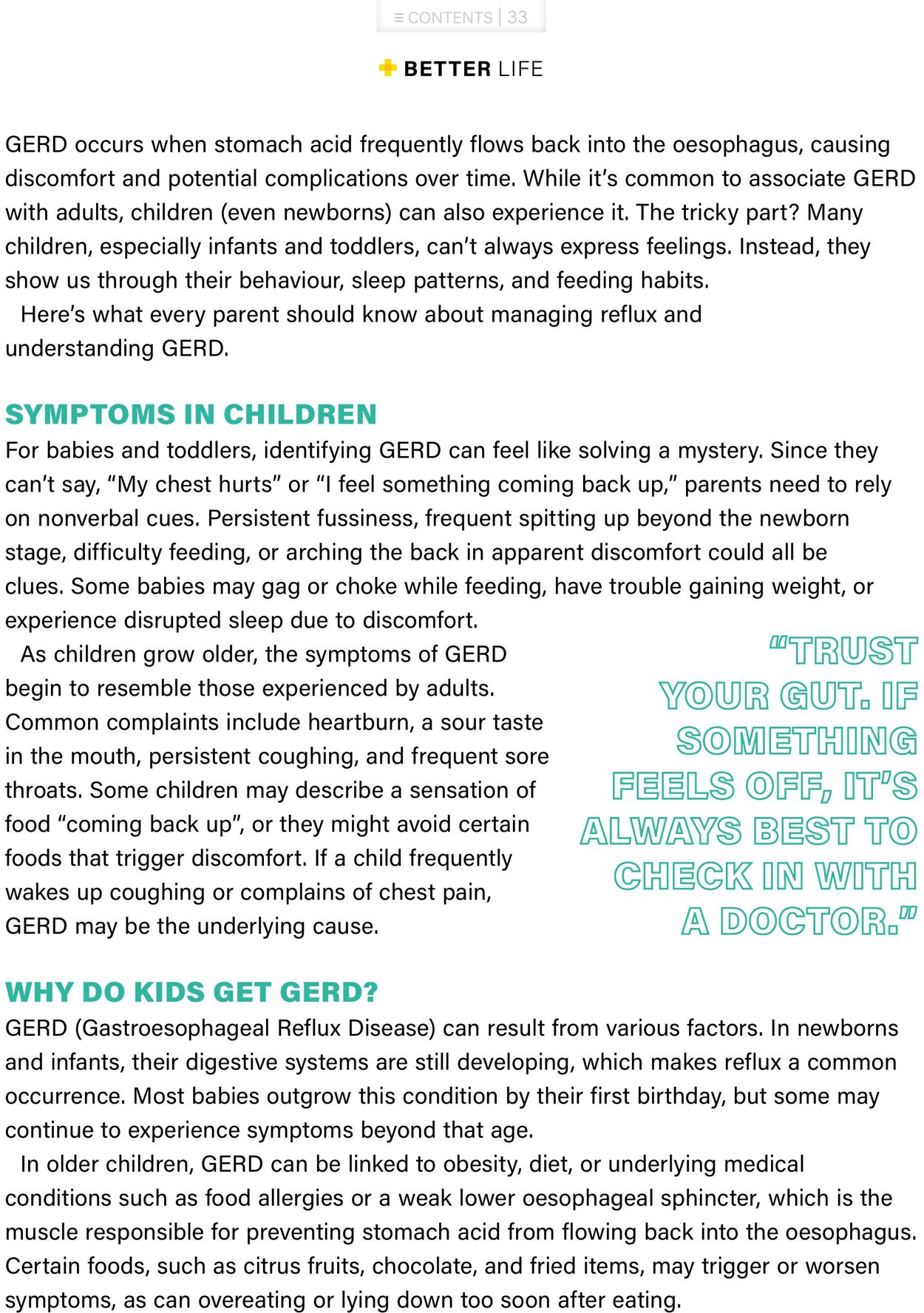
“+ BETTER LIFE GERD occurs when stomach acid frequently flows back into the oesophagus, causing discomfort and potential complications over time. While it’s common to associate GERD with adults, children (even newborns) can also experience it. The tricky part? Many children, especially infants and toddlers, can’t always express feelings. Instead, they show us through their behaviour, sleep patterns, and feeding habits. Here's what every parent should know about managing reflux and understanding GERD. SYMPTOMS IN CHILDREN For babies and toddlers, identifying GERD can feel like solving a mystery. Since they can't say, “My chest hurts” or “I feel something coming back up,” parents need to rely on nonverbal cues. Persistent fussiness, frequent spitting up beyond the newborn stage, difficulty feeding, or arching the back in apparent discomfort could all be clues. Some babies may gag or choke while feeding, have trouble gaining weight, or experience disrupted sleep due to discomfort. As children grow older, the symptoms of GERD “TRUST begin to resemble those experienced by adults. YOUR GUT. IE Common complaints include heartburn, a sour taste SOMETHING in the mouth, persistent coughing, and frequent sore throats. Some children may describe a sensation of FEELS OFF, ms food “coming back up”, or they might avoid certain ALWAYS BEST TO foods that trigger discomfort. If a child frequently eH ECK IN Work wakes up coughing or complains of chest pain, GERD may be the underlying cause. AN DOCTOR.” WHY DO KIDS GET GERD? GERD (Gastroesophageal Reflux Disease) can result from various factors. In newborns and infants, their digestive systems are still developing, which makes reflux a common occurrence. Most babies outgrow this condition by their first birthday, but some may continue to experience symptoms beyond that age. In older children, GERD can be linked to obesity, diet, or underlying medical conditions such as food allergies or a weak lower oesophageal sphincter, which is the muscle responsible for preventing stomach acid from flowing back into the oesophagus. Certain foods, such as citrus fruits, chocolate, and fried items, may trigger or worsen symptoms, as can overeating or lying down too soon after eating.


Latest specials

Advertisement
“+ BETTER LIFE GERD occurs when stomach acid frequently flows back into the oesophagus, causing discomfort and potential complications over time. While it’s common to associate GERD with adults, children (even newborns) can also experience it. The tricky part? Many children, especially infants and toddlers, can’t always express feelings. Instead, they show us through their behaviour, sleep patterns, and feeding habits. Here's what every parent should know about managing reflux and understanding GERD. SYMPTOMS IN CHILDREN For babies and toddlers, identifying GERD can feel like solving a mystery. Since they can't say, “My chest hurts” or “I feel something coming back up,” parents need to rely on nonverbal cues. Persistent fussiness, frequent spitting up beyond the newborn stage, difficulty feeding, or arching the back in apparent discomfort could all be clues. Some babies may gag or choke while feeding, have trouble gaining weight, or experience disrupted sleep due to discomfort. As children grow older, the symptoms of GERD “TRUST begin to resemble those experienced by adults. YOUR GUT. IE Common complaints include heartburn, a sour taste SOMETHING in the mouth, persistent coughing, and frequent sore throats. Some children may describe a sensation of FEELS OFF, ms food “coming back up”, or they might avoid certain ALWAYS BEST TO foods that trigger discomfort. If a child frequently eH ECK IN Work wakes up coughing or complains of chest pain, GERD may be the underlying cause. AN DOCTOR.” WHY DO KIDS GET GERD? GERD (Gastroesophageal Reflux Disease) can result from various factors. In newborns and infants, their digestive systems are still developing, which makes reflux a common occurrence. Most babies outgrow this condition by their first birthday, but some may continue to experience symptoms beyond that age. In older children, GERD can be linked to obesity, diet, or underlying medical conditions such as food allergies or a weak lower oesophageal sphincter, which is the muscle responsible for preventing stomach acid from flowing back into the oesophagus. Certain foods, such as citrus fruits, chocolate, and fried items, may trigger or worsen symptoms, as can overeating or lying down too soon after eating.

Advertisement
Advertisement

If you continue to browse this website, you accept the use of cookies.

Name Details