The query has to be between 2 and 50 characters













Products in this catalogue
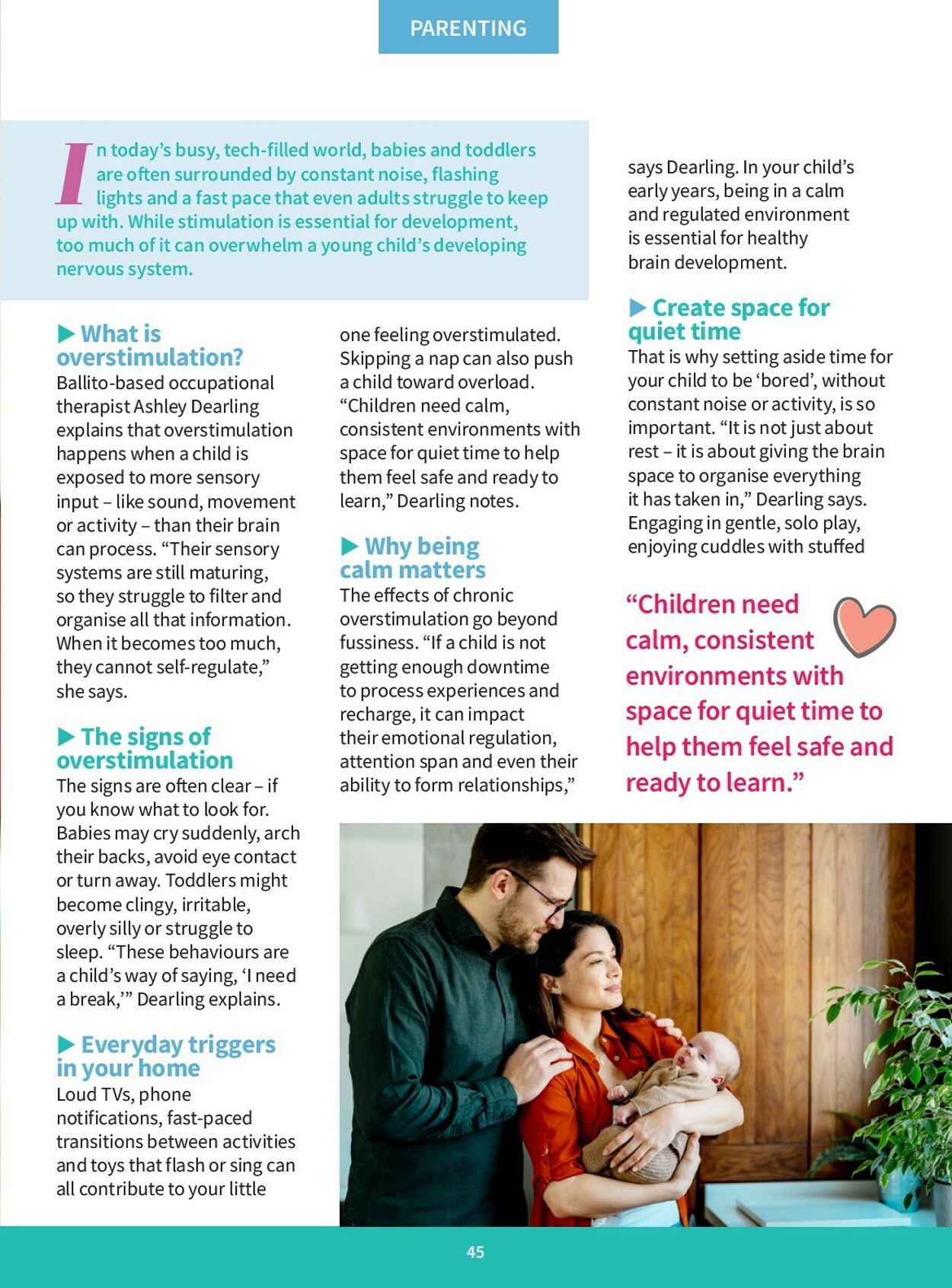
PARENTING are often surrounded by constant noise, flashing I n today’s busy, tech-filled world, babies and toddlers lights and a fast pace that even adults struggle to keep up with. While stimulation is essential for development, too much of it can overwhelm a young child’s developing nervous system. > What is overstimulation? Ballito-based occupational therapist Ashley Dearling explains that overstimulation happens when a child is exposed to more sensory input - like sound, movement or activity - than their brain can process. “Their sensory systems are still maturing, so they struggle to filter and organise all that information. When it becomes too much, they cannot self-regulate,” she says. > The signs of overstimulation The signs are often clear - if you know what to look for. Babies may cry suddenly, arch their backs, avoid eye contact or turn away. Toddlers might become clingy, irritable, overly silly or struggle to sleep. “These behaviours are achild’s way of saying, ‘Ineed a break,” Dearling explains. > Everyday triggers in your home Loud TVs, phone notifications, fast-paced transitions between activities and toys that flash or sing can all contribute to your little one feeling overstimulated. Skipping a nap can also push achild toward overload. “Children need calm, consistent environments with space for quiet time to help them feel safe and ready to learn,” Dearling notes. > Why being calm matters The effects of chronic overstimulation go beyond fussiness. “If a child is not getting enough downtime to process experiences and recharge, it can impact their emotional regulation, attention span and even their ability to form relationships,” says Dearling. In your child’s early years, being in a calm and regulated environment is essential for healthy brain development. > Create space for quiet time That is why setting aside time for your child to be ‘bored’, without constant noise or activity, is so important. “Itis not just about rest - it is about giving the brain space to organise everything it has taken in,” Dearling says. Engaging in gentle, solo play, enjoying cuddles with stuffed “Children need calm, consistent © environments with space for quiet time to help them feel safe and ready to learn.”












| Name | Details |
|---|