The query has to be between 2 and 50 characters
Advertisement
Advertisement

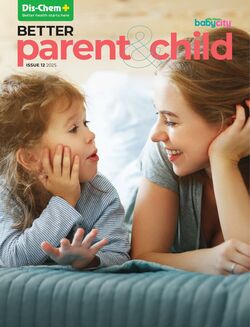
Current special Baby City - Valid from 19.05 to 19.06 - Page nb 42

Advertisement
Advertisement
Advertisement
Advertisement
Special Baby City 19.05.2025 - 19.06.2025
Special Boxer - GP May ME 25 May, 2026 - 7 Jun, 2026
Boxer - GP May ME
25 May, 2026 - 7 Jun, 2026
Special Boxer - GP May ME 25 May, 2026 - 7 Jun, 2026
Boxer - GP May ME
25 May, 2026 - 7 Jun, 2026
Special Boxer - Atlyn Mall Liquor Grand Opening 22 May, 2026 - 7 Jun, 2026
Boxer - Atlyn Mall Liquor Grand Opening
22 May, 2026 - 7 Jun, 2026
Special Boxer - Atlyn Mall Liquor Grand Opening 25 May, 2026 - 7 Jun, 2026
Boxer - Atlyn Mall Liquor Grand Opening
25 May, 2026 - 7 Jun, 2026
See next flyer
Advertisement
Advertisement
Advertisement

Products in this catalogue

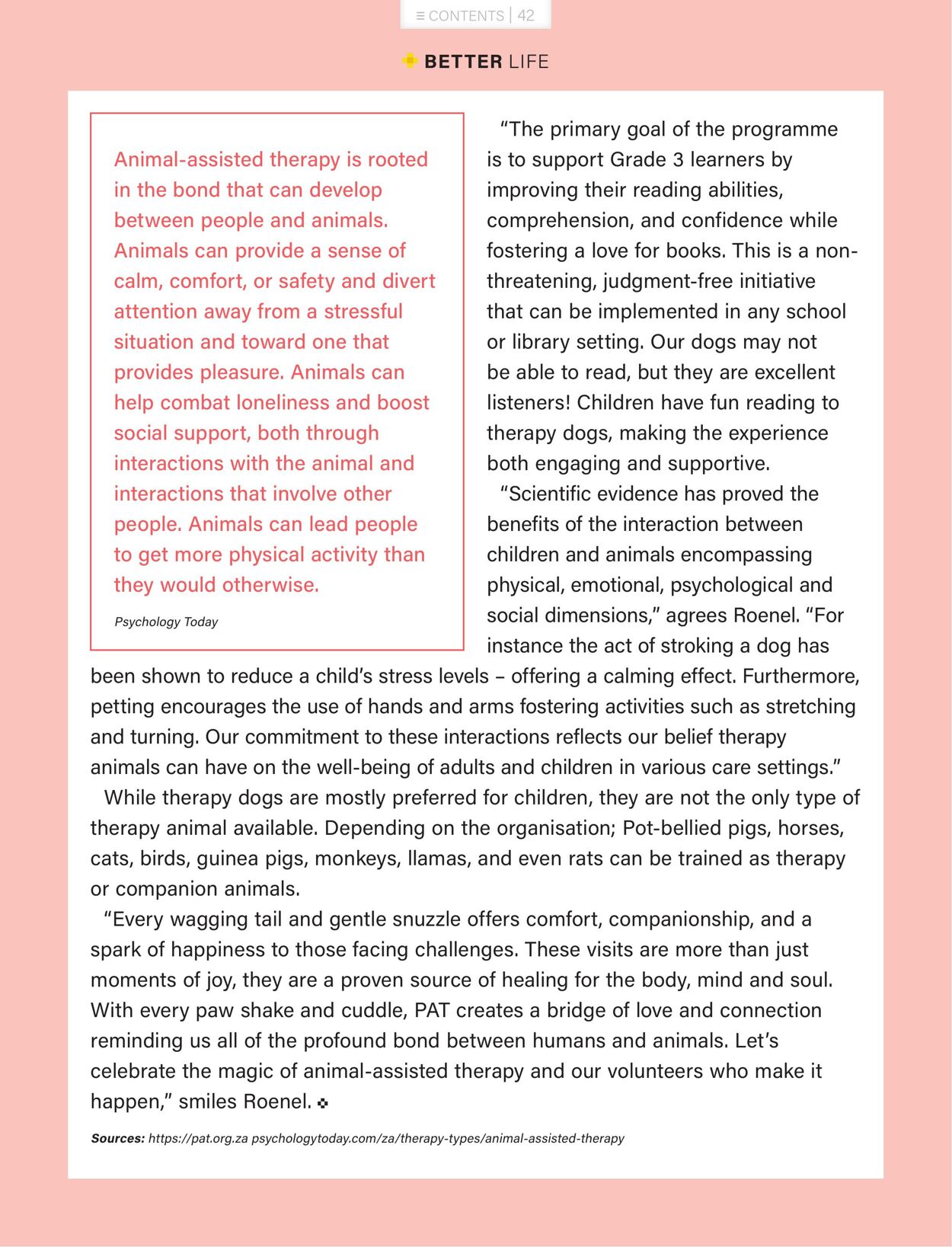
BETTER LIFE Animal-assisted therapy is rooted in the bond that can develop between people and animals. Animals can provide a sense of calm, comfort, or safety and divert attention away from a stressful situation and toward one that provides pleasure, Animals can help combat loneliness and boost social support, both through interactions with the animal and interactions that involve other people. Animals can lead people to get more physical activity than they would otherwise. Psychology Today “The primary goal of the programme is to support Grade 3 learners by improving their reading abilities, comprehension, and confidence while fostering a love for books. This is a non- threatening, judgment-free initiative that can be implemented in any school or library setting. Our dogs may not be able to read, but they are excellent listeners! Children have fun reading to therapy dogs, making the experience both engaging and supportive. “Scientific evidence has proved the benefits of the interaction between children and animals encompassing physical, emotional, psychological and social dimensions,” agrees Roenel. “For instance the act of stroking a dog has been shown to reduce a child’s stress levels - offering a calming effect. Furthermore, petting encourages the use of hands and arms fostering activities such as stretching and turning. Our commitment to these interactions reflects our belief therapy animals can have on the well-being of adults and children in various care settings.” While therapy dogs are mostly preferred for children, they are not the only type of therapy animal available. Depending on the organisation; Pot-bellied pigs, horses, cats, birds, guinea pigs, monkeys, llamas, and even rats can be trained as therapy or companion animals. “Every wagging tail and gentle snuzzle offers comfort, companionship, and a spark of happiness to those facing challenges. These visits are more than just moments of joy, they are a proven source of healing for the body, mind and soul. With every paw shake and cuddle, PAT creates a bridge of love and connection reminding us all of the profound bond between humans and animals. Let’s celebrate the magic of animal-assisted therapy and our volunteers who make it happen,” smiles Roenel. = Sources: https://pat.org.za psychologytoday.com/za/therapy-types/animal-assisted-therapy


Latest specials

Advertisement
BETTER LIFE Animal-assisted therapy is rooted in the bond that can develop between people and animals. Animals can provide a sense of calm, comfort, or safety and divert attention away from a stressful situation and toward one that provides pleasure, Animals can help combat loneliness and boost social support, both through interactions with the animal and interactions that involve other people. Animals can lead people to get more physical activity than they would otherwise. Psychology Today “The primary goal of the programme is to support Grade 3 learners by improving their reading abilities, comprehension, and confidence while fostering a love for books. This is a non- threatening, judgment-free initiative that can be implemented in any school or library setting. Our dogs may not be able to read, but they are excellent listeners! Children have fun reading to therapy dogs, making the experience both engaging and supportive. “Scientific evidence has proved the benefits of the interaction between children and animals encompassing physical, emotional, psychological and social dimensions,” agrees Roenel. “For instance the act of stroking a dog has been shown to reduce a child’s stress levels - offering a calming effect. Furthermore, petting encourages the use of hands and arms fostering activities such as stretching and turning. Our commitment to these interactions reflects our belief therapy animals can have on the well-being of adults and children in various care settings.” While therapy dogs are mostly preferred for children, they are not the only type of therapy animal available. Depending on the organisation; Pot-bellied pigs, horses, cats, birds, guinea pigs, monkeys, llamas, and even rats can be trained as therapy or companion animals. “Every wagging tail and gentle snuzzle offers comfort, companionship, and a spark of happiness to those facing challenges. These visits are more than just moments of joy, they are a proven source of healing for the body, mind and soul. With every paw shake and cuddle, PAT creates a bridge of love and connection reminding us all of the profound bond between humans and animals. Let’s celebrate the magic of animal-assisted therapy and our volunteers who make it happen,” smiles Roenel. = Sources: https://pat.org.za psychologytoday.com/za/therapy-types/animal-assisted-therapy

Advertisement
Advertisement

If you continue to browse this website, you accept the use of cookies.

Name Details