The query has to be between 2 and 50 characters
















Products in this catalogue
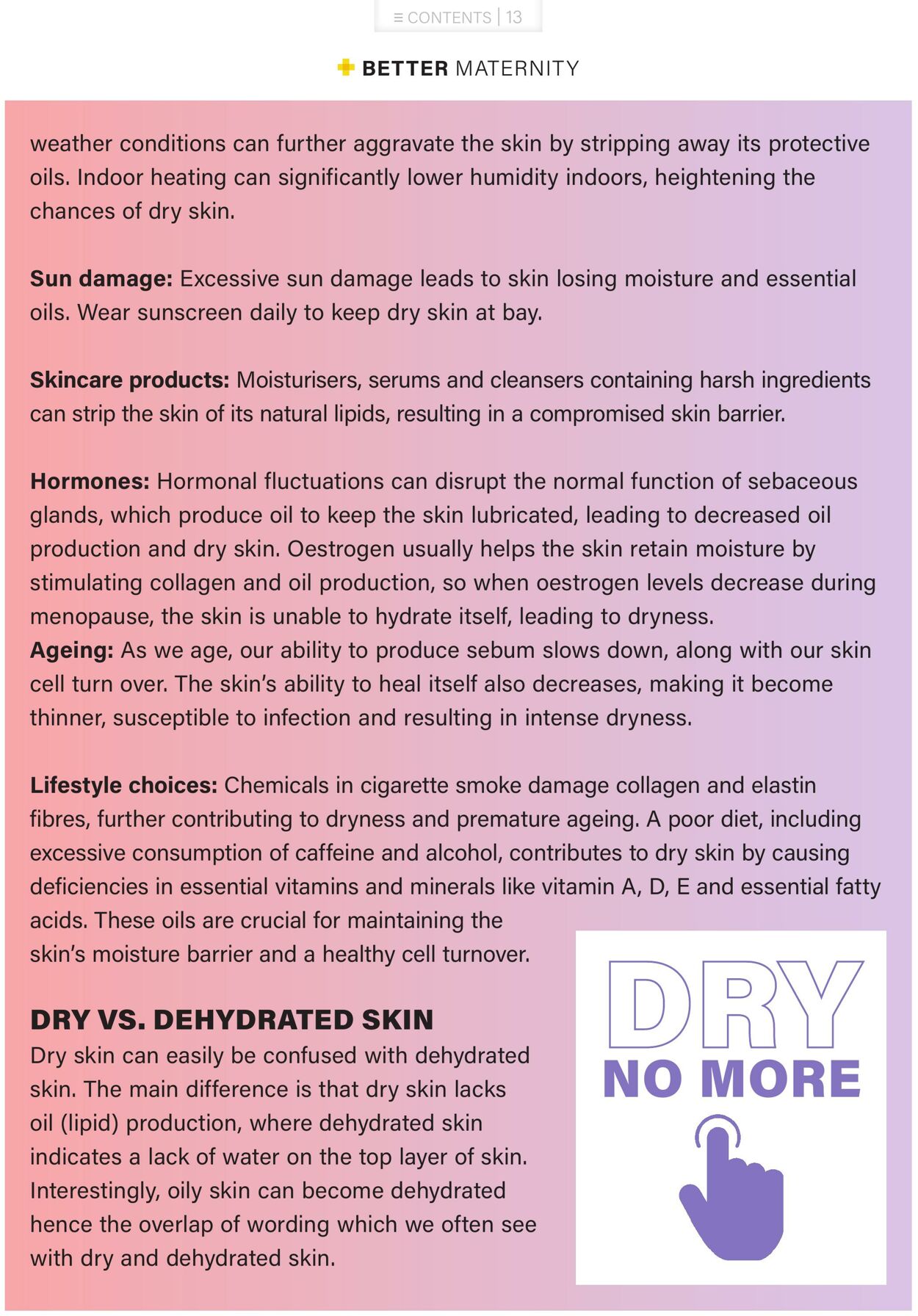
* BETTER MATERNITY weather conditions can further aggravate the skin by stripping away its protective oils. Indoor heating can significantly lower humidity indoors, heightening the chances of dry skin. Sun damage: Excessive sun damage leads to skin losing moisture and essential oils. Wear sunscreen daily to keep dry skin at bay. Skincare products: Moisturisers, serums and cleansers containing harsh ingredients can strip the skin of its natural lipids, resulting in a compromised skin barrier. Hormones: Hormonal fluctuations can disrupt the normal function of sebaceous glands, which produce oil to keep the skin lubricated, leading to decreased oil production and dry skin. Oestrogen usually helps the skin retain moisture by stimulating collagen and oil production, so when oestrogen levels decrease during menopause, the skin is unable to hydrate itself, leading to dryness. Ageing: As we age, our ability to produce sebum slows down, along with our skin cell turn over. The skin's ability to heal itself also decreases, making it become thinner, susceptible to infection and resulting in intense dryness. Lifestyle choices: Chemicals in cigarette smoke damage collagen and elastin fibres, further contributing to dryness and premature ageing. A poor diet, including excessive consumption of caffeine and alcohol, contributes to dry skin by causing deficiencies in essential vitamins and minerals like vitamin A, D, E and essential fatty acids. These oils are crucial for maintaining the skin's moisture barrier and a healthy cell turnover. DRY VS. DEHYDRATED SKIN Dry skin can easily be confused with dehydrated skin. The main difference is that dry skin lacks N Oo M Oo Bi E oil (lipid) production, where dehydrated skin (a) indicates a lack of water on the top layer of skin. Interestingly, oily skin can become dehydrated hence the overlap of wording which we often see with dry and dehydrated skin.












| Name | Details |
|---|