The query has to be between 2 and 50 characters

Advertisement
Advertisement

Current special Baby City - Valid from 01.11 to 30.11 - Page nb 27

Advertisement
Advertisement
Advertisement
Advertisement
Special Baby City 01.11.2025 - 30.11.2025
Special Boxer - Atlyn Mall Liquor Grand Opening 22 May, 2026 - 7 Jun, 2026
Boxer - Atlyn Mall Liquor Grand Opening
22 May, 2026 - 7 Jun, 2026
Special Game - Game : More 4 Less (01 May - 31 July 2026) — www.guzzle.co.za 1 May, 2026 - 31 Jul, 2026
Game - Game : More 4 Less (01 May - 31 July 2026) — www.guzzle.co.za
1 May, 2026 - 31 Jul, 2026
Special Boxer - GP May ME Liquor 25 May, 2026 - 7 Jun, 2026
Boxer - GP May ME Liquor
25 May, 2026 - 7 Jun, 2026
Special Boxer - GP May ME 25 May, 2026 - 7 Jun, 2026
Boxer - GP May ME
25 May, 2026 - 7 Jun, 2026
See next flyer
Advertisement
Advertisement
Advertisement

Products in this catalogue

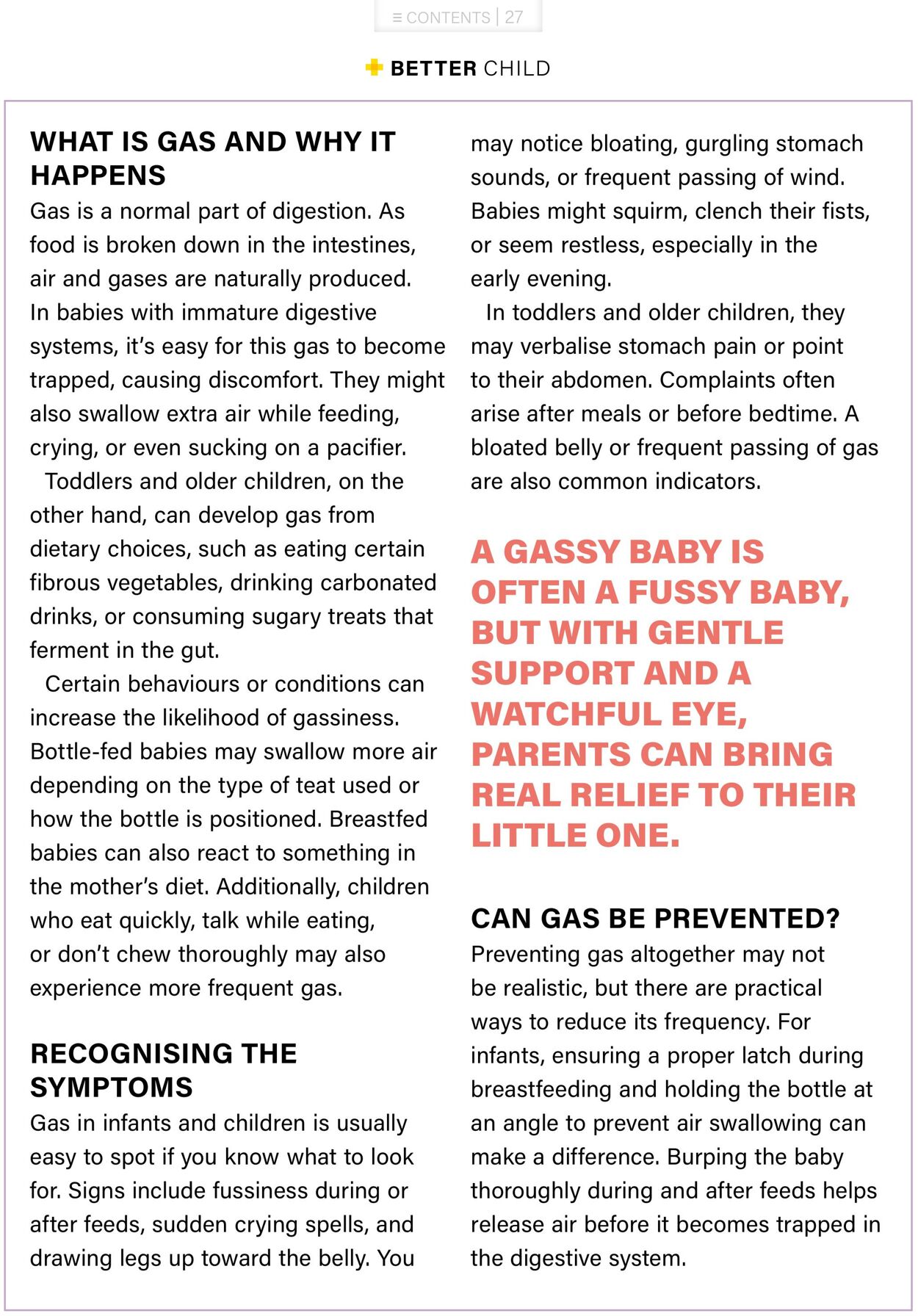
“+ BETTER CHILD WHAT IS GAS AND WHY IT HAPPENS Gas is a normal part of digestion. As food is broken down in the intestines, air and gases are naturally produced. In babies with immature digestive systems, it's easy for this gas to become trapped, causing discomfort. They might also swallow extra air while feeding, crying, or even sucking on a pacifier. Toddlers and older children, on the other hand, can develop gas from dietary choices, such as eating certain fibrous vegetables, drinking carbonated drinks, or consuming sugary treats that ferment in the gut. Certain behaviours or conditions can increase the likelihood of gassiness. Bottle-fed babies may swallow more air depending on the type of teat used or how the bottle is positioned. Breastfed babies can also react to something in the mother's diet. Additionally, children who eat quickly, talk while eating, or don't chew thoroughly may also experience more frequent gas. RECOGNISING THE SYMPTOMS Gas in infants and children is usually easy to spot if you know what to look for. Signs include fussiness during or after feeds, sudden crying spells, and drawing legs up toward the belly. You may notice bloating, gurgling stomach sounds, or frequent passing of wind. Babies might squirm, clench their fists, or seem restless, especially in the early evening. In toddlers and older children, they may verbalise stomach pain or point to their abdomen. Complaints often arise after meals or before bedtime. A bloated belly or frequent passing of gas are also common indicators. A GASSY BABY IS OFTEN A FUSSY BABY, BUT WITH GENTLE SUPPORT AND A WATCHFUL EYE, PARENTS CAN BRING REAL RELIEF TO THEIR LITTLE ONE. CAN GAS BE PREVENTED? Preventing gas altogether may not be realistic, but there are practical ways to reduce its frequency. For infants, ensuring a proper latch during breastfeeding and holding the bottle at an angle to prevent air swallowing can make a difference. Burping the baby thoroughly during and after feeds helps release air before it becomes trapped in the digestive system.


Latest specials

Advertisement
“+ BETTER CHILD WHAT IS GAS AND WHY IT HAPPENS Gas is a normal part of digestion. As food is broken down in the intestines, air and gases are naturally produced. In babies with immature digestive systems, it's easy for this gas to become trapped, causing discomfort. They might also swallow extra air while feeding, crying, or even sucking on a pacifier. Toddlers and older children, on the other hand, can develop gas from dietary choices, such as eating certain fibrous vegetables, drinking carbonated drinks, or consuming sugary treats that ferment in the gut. Certain behaviours or conditions can increase the likelihood of gassiness. Bottle-fed babies may swallow more air depending on the type of teat used or how the bottle is positioned. Breastfed babies can also react to something in the mother's diet. Additionally, children who eat quickly, talk while eating, or don't chew thoroughly may also experience more frequent gas. RECOGNISING THE SYMPTOMS Gas in infants and children is usually easy to spot if you know what to look for. Signs include fussiness during or after feeds, sudden crying spells, and drawing legs up toward the belly. You may notice bloating, gurgling stomach sounds, or frequent passing of wind. Babies might squirm, clench their fists, or seem restless, especially in the early evening. In toddlers and older children, they may verbalise stomach pain or point to their abdomen. Complaints often arise after meals or before bedtime. A bloated belly or frequent passing of gas are also common indicators. A GASSY BABY IS OFTEN A FUSSY BABY, BUT WITH GENTLE SUPPORT AND A WATCHFUL EYE, PARENTS CAN BRING REAL RELIEF TO THEIR LITTLE ONE. CAN GAS BE PREVENTED? Preventing gas altogether may not be realistic, but there are practical ways to reduce its frequency. For infants, ensuring a proper latch during breastfeeding and holding the bottle at an angle to prevent air swallowing can make a difference. Burping the baby thoroughly during and after feeds helps release air before it becomes trapped in the digestive system.

Advertisement
Advertisement

If you continue to browse this website, you accept the use of cookies.

Name Details