The query has to be between 2 and 50 characters

Advertisement
Advertisement

Current special Baby City - Valid from 01.09 to 30.09 - Page nb 6

Advertisement
Advertisement
Advertisement
Advertisement
Special Baby City 01.09.2025 - 30.09.2025
Special Boxer - GP May ME 25 May, 2026 - 7 Jun, 2026
Boxer - GP May ME
25 May, 2026 - 7 Jun, 2026
Special Boxer - Atlyn Mall Liquor Grand Opening 22 May, 2026 - 7 Jun, 2026
Boxer - Atlyn Mall Liquor Grand Opening
22 May, 2026 - 7 Jun, 2026
Special Boxer - GP May ME Liquor Special Stores 25 May, 2026 - 7 Jun, 2026
Boxer - GP May ME Liquor Special Stores
25 May, 2026 - 7 Jun, 2026
Special Boxer - Atlyn Mall Liquor Grand Opening 22 May, 2026 - 7 Jun, 2026
Boxer - Atlyn Mall Liquor Grand Opening
22 May, 2026 - 7 Jun, 2026
See next flyer
Advertisement
Advertisement
Advertisement

Products in this catalogue

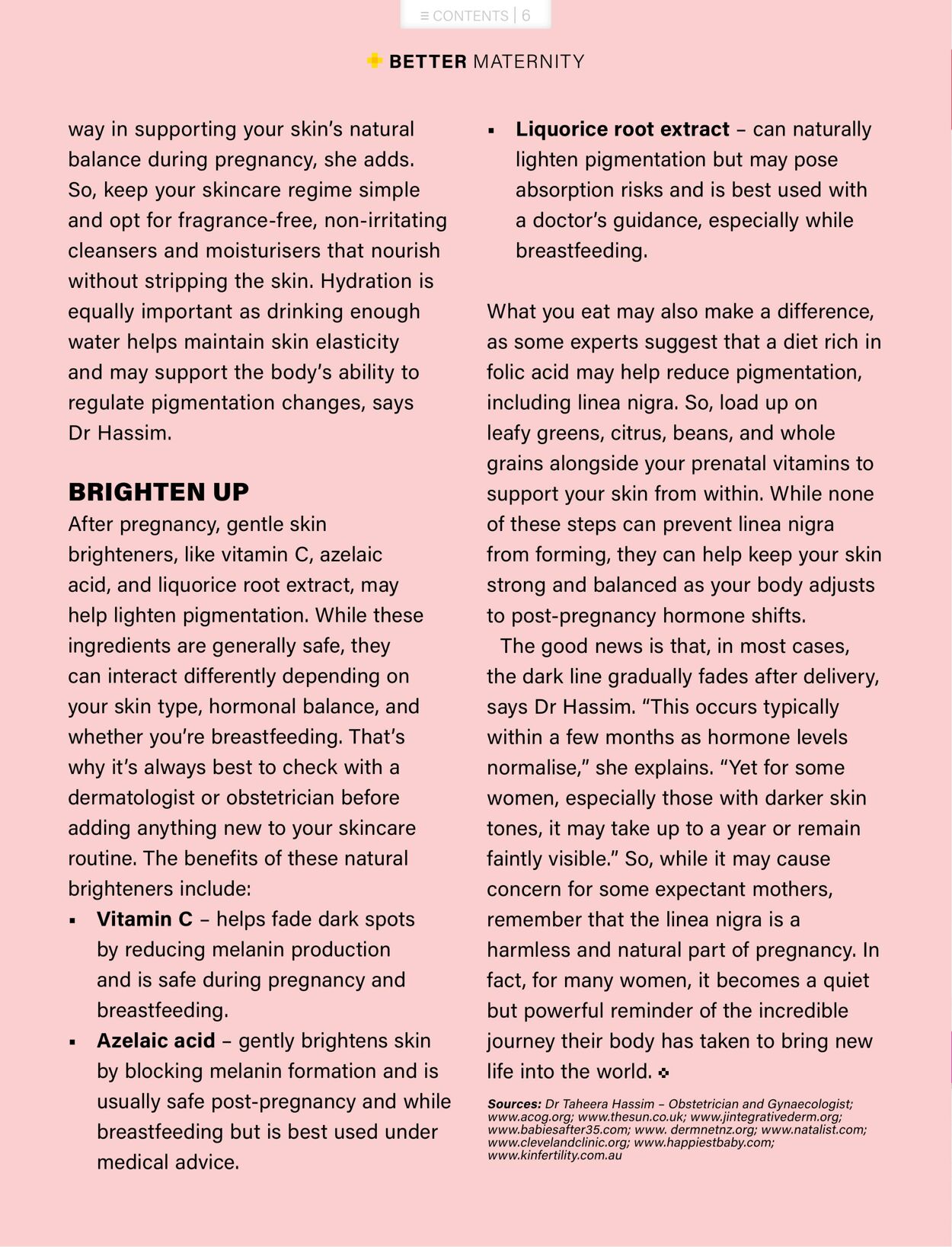
~ BETTER MATERNITY way in supporting your skin's natural balance during pregnancy, she adds. So, keep your skincare regime simple and opt for fragrance-free, non-irritating cleansers and moisturisers that nourish without stripping the skin. Hydration is equally important as drinking enough water helps maintain skin elasticity and may support the body's ability to regulate pigmentation changes, says Dr Hassim. BRIGHTEN UP After pregnancy, gentle skin brighteners, like vitamin C, azelaic acid, and liquorice root extract, may help lighten pigmentation. While these ingredients are generally safe, they can interact differently depending on your skin type, hormonal balance, and whether you're breastfeeding. That's why it’s always best to check with a dermatologist or obstetrician before adding anything new to your skincare routine. The benefits of these natural brighteners include: « Vitamin C - helps fade dark spots by reducing melanin production and is safe during pregnancy and breastfeeding. « Azelaic acid - gently brightens skin by blocking melanin formation and is usually safe post-pregnancy and while breastfeeding but is best used under medical advice. = Liquorice root extract - can naturally lighten pigmentation but may pose absorption risks and is best used with a doctor's guidance, especially while breastfeeding. What you eat may also make a difference, as some experts suggest that a diet rich in folic acid may help reduce pigmentation, including linea nigra. So, load up on leafy greens, citrus, beans, and whole grains alongside your prenatal vitamins to support your skin from within. While none of these steps can prevent linea nigra from forming, they can help keep your skin strong and balanced as your body adjusts to post-pregnancy hormone shifts. The good news is that, in most cases, the dark line gradually fades after delivery, says Dr Hassim. “This occurs typically within a few months as hormone levels normalise,” she explains. “Yet for some women, especially those with darker skin tones, it may take up to a year or remain faintly visible.” So, while it may cause concern for some expectant mothers, remember that the linea nigra is a harmless and natural part of pregnancy. In fact, for many women, it becomes a quiet but powerful reminder of the incredible journey their body has taken to bring new life into the world. = Sources: Dr Taheera Hassim - Obstetrician and Gynaecologist; www.acog.org; www.thesun.co.uk; www,integrativederm.org; www.babiesafter35.com; www. dermnetnz.org; www.natalist.com; www.clevelandclinic.org; www.happiestbaby.com; www.kinfertility.com.au


Latest specials

Advertisement
~ BETTER MATERNITY way in supporting your skin's natural balance during pregnancy, she adds. So, keep your skincare regime simple and opt for fragrance-free, non-irritating cleansers and moisturisers that nourish without stripping the skin. Hydration is equally important as drinking enough water helps maintain skin elasticity and may support the body's ability to regulate pigmentation changes, says Dr Hassim. BRIGHTEN UP After pregnancy, gentle skin brighteners, like vitamin C, azelaic acid, and liquorice root extract, may help lighten pigmentation. While these ingredients are generally safe, they can interact differently depending on your skin type, hormonal balance, and whether you're breastfeeding. That's why it’s always best to check with a dermatologist or obstetrician before adding anything new to your skincare routine. The benefits of these natural brighteners include: « Vitamin C - helps fade dark spots by reducing melanin production and is safe during pregnancy and breastfeeding. « Azelaic acid - gently brightens skin by blocking melanin formation and is usually safe post-pregnancy and while breastfeeding but is best used under medical advice. = Liquorice root extract - can naturally lighten pigmentation but may pose absorption risks and is best used with a doctor's guidance, especially while breastfeeding. What you eat may also make a difference, as some experts suggest that a diet rich in folic acid may help reduce pigmentation, including linea nigra. So, load up on leafy greens, citrus, beans, and whole grains alongside your prenatal vitamins to support your skin from within. While none of these steps can prevent linea nigra from forming, they can help keep your skin strong and balanced as your body adjusts to post-pregnancy hormone shifts. The good news is that, in most cases, the dark line gradually fades after delivery, says Dr Hassim. “This occurs typically within a few months as hormone levels normalise,” she explains. “Yet for some women, especially those with darker skin tones, it may take up to a year or remain faintly visible.” So, while it may cause concern for some expectant mothers, remember that the linea nigra is a harmless and natural part of pregnancy. In fact, for many women, it becomes a quiet but powerful reminder of the incredible journey their body has taken to bring new life into the world. = Sources: Dr Taheera Hassim - Obstetrician and Gynaecologist; www.acog.org; www.thesun.co.uk; www,integrativederm.org; www.babiesafter35.com; www. dermnetnz.org; www.natalist.com; www.clevelandclinic.org; www.happiestbaby.com; www.kinfertility.com.au

Advertisement
Advertisement

If you continue to browse this website, you accept the use of cookies.

Name Details