The query has to be between 2 and 50 characters

Advertisement
Advertisement

Current special Baby City - Valid from 01.09 to 30.09 - Page nb 27

Advertisement
Advertisement
Advertisement
Advertisement
Special Baby City 01.09.2025 - 30.09.2025
Special Boxer - GP May ME Special Stores 25 May, 2026 - 7 Jun, 2026
Boxer - GP May ME Special Stores
25 May, 2026 - 7 Jun, 2026
Special Boxer - Atlyn Mall Liquor Grand Opening 25 May, 2026 - 7 Jun, 2026
Boxer - Atlyn Mall Liquor Grand Opening
25 May, 2026 - 7 Jun, 2026
Special Boxer - GP May ME Liquor Special Stores 25 May, 2026 - 7 Jun, 2026
Boxer - GP May ME Liquor Special Stores
25 May, 2026 - 7 Jun, 2026
Special Game - Game : More 4 Less (01 May - 31 July 2026) — www.guzzle.co.za 1 May, 2026 - 31 Jul, 2026
Game - Game : More 4 Less (01 May - 31 July 2026) — www.guzzle.co.za
1 May, 2026 - 31 Jul, 2026
See next flyer
Advertisement
Advertisement
Advertisement

Products in this catalogue

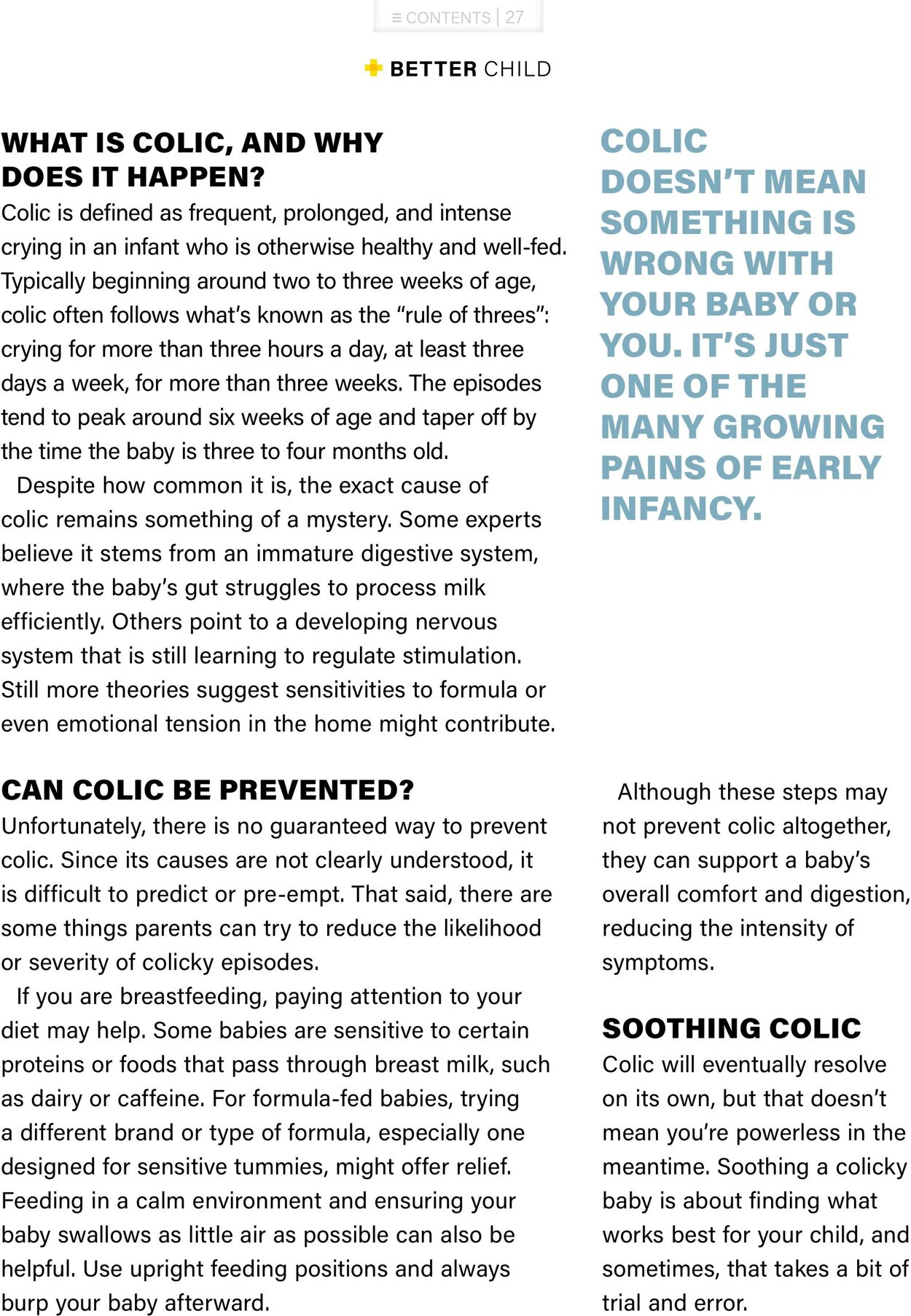
*» BETTER CHILD WHAT IS COLIC, AND WHY DOES IT HAPPEN? Colic is defined as frequent, prolonged, and intense crying in an infant who is otherwise healthy and well-fed. Typically beginning around two to three weeks of age, colic often follows what's known as the “rule of threes”: crying for more than three hours a day, at least three days a week, for more than three weeks. The episodes tend to peak around six weeks of age and taper off by the time the baby is three to four months old. Despite how common it is, the exact cause of colic remains something of a mystery. Some experts believe it stems from an immature digestive system, where the baby’s gut struggles to process milk efficiently. Others point to a developing nervous system that is still learning to regulate stimulation. Still more theories suggest sensitivities to formula or even emotional tension in the home might contribute. CAN COLIC BE PREVENTED? Unfortunately, there is no guaranteed way to prevent colic. Since its causes are not clearly understood, it is difficult to predict or pre-empt. That said, there are some things parents can try to reduce the likelihood or severity of colicky episodes. If you are breastfeeding, paying attention to your diet may help. Some babies are sensitive to certain proteins or foods that pass through breast milk, such as dairy or caffeine. For formula-fed babies, trying a different brand or type of formula, especially one designed for sensitive tummies, might offer relief. Feeding in a calm environment and ensuring your baby swallows as little air as possible can also be helpful. Use upright feeding positions and always burp your baby afterward. COLIC DOESN’T MEAN SOMETHING IS WRONG WITH YOUR BABY OR YOU. IT’S JUST ONE OF THE MANY GROWING PAINS OF EARLY INFANCY. Although these steps may not prevent colic altogether, they can support a baby’s overall comfort and digestion, reducing the intensity of symptoms. SOOTHING COLIC Colic will eventually resolve on its own, but that doesn’t mean you're powerless in the meantime. Soothing a colicky baby is about finding what works best for your child, and sometimes, that takes a bit of trial and error.


Latest specials

Advertisement
*» BETTER CHILD WHAT IS COLIC, AND WHY DOES IT HAPPEN? Colic is defined as frequent, prolonged, and intense crying in an infant who is otherwise healthy and well-fed. Typically beginning around two to three weeks of age, colic often follows what's known as the “rule of threes”: crying for more than three hours a day, at least three days a week, for more than three weeks. The episodes tend to peak around six weeks of age and taper off by the time the baby is three to four months old. Despite how common it is, the exact cause of colic remains something of a mystery. Some experts believe it stems from an immature digestive system, where the baby’s gut struggles to process milk efficiently. Others point to a developing nervous system that is still learning to regulate stimulation. Still more theories suggest sensitivities to formula or even emotional tension in the home might contribute. CAN COLIC BE PREVENTED? Unfortunately, there is no guaranteed way to prevent colic. Since its causes are not clearly understood, it is difficult to predict or pre-empt. That said, there are some things parents can try to reduce the likelihood or severity of colicky episodes. If you are breastfeeding, paying attention to your diet may help. Some babies are sensitive to certain proteins or foods that pass through breast milk, such as dairy or caffeine. For formula-fed babies, trying a different brand or type of formula, especially one designed for sensitive tummies, might offer relief. Feeding in a calm environment and ensuring your baby swallows as little air as possible can also be helpful. Use upright feeding positions and always burp your baby afterward. COLIC DOESN’T MEAN SOMETHING IS WRONG WITH YOUR BABY OR YOU. IT’S JUST ONE OF THE MANY GROWING PAINS OF EARLY INFANCY. Although these steps may not prevent colic altogether, they can support a baby’s overall comfort and digestion, reducing the intensity of symptoms. SOOTHING COLIC Colic will eventually resolve on its own, but that doesn’t mean you're powerless in the meantime. Soothing a colicky baby is about finding what works best for your child, and sometimes, that takes a bit of trial and error.

Advertisement
Advertisement

If you continue to browse this website, you accept the use of cookies.

Name Details