The query has to be between 2 and 50 characters

Advertisement
Advertisement

Current special Baby City - Valid from 22.08 to 22.09 - Page nb 5

Advertisement
Advertisement
Advertisement
Advertisement
Special Baby City 22.08.2025 - 22.09.2025
Special Boxer - GP May ME Liquor Special Stores 25 May, 2026 - 7 Jun, 2026
Boxer - GP May ME Liquor Special Stores
25 May, 2026 - 7 Jun, 2026
Special Boxer - GP May ME 25 May, 2026 - 7 Jun, 2026
Boxer - GP May ME
25 May, 2026 - 7 Jun, 2026
Special Boxer - Atlyn Mall Liquor Grand Opening 25 May, 2026 - 7 Jun, 2026
Boxer - Atlyn Mall Liquor Grand Opening
25 May, 2026 - 7 Jun, 2026
Special Boxer - GP May ME Liquor 25 May, 2026 - 7 Jun, 2026
Boxer - GP May ME Liquor
25 May, 2026 - 7 Jun, 2026
See next flyer
Advertisement
Advertisement
Advertisement

Products in this catalogue

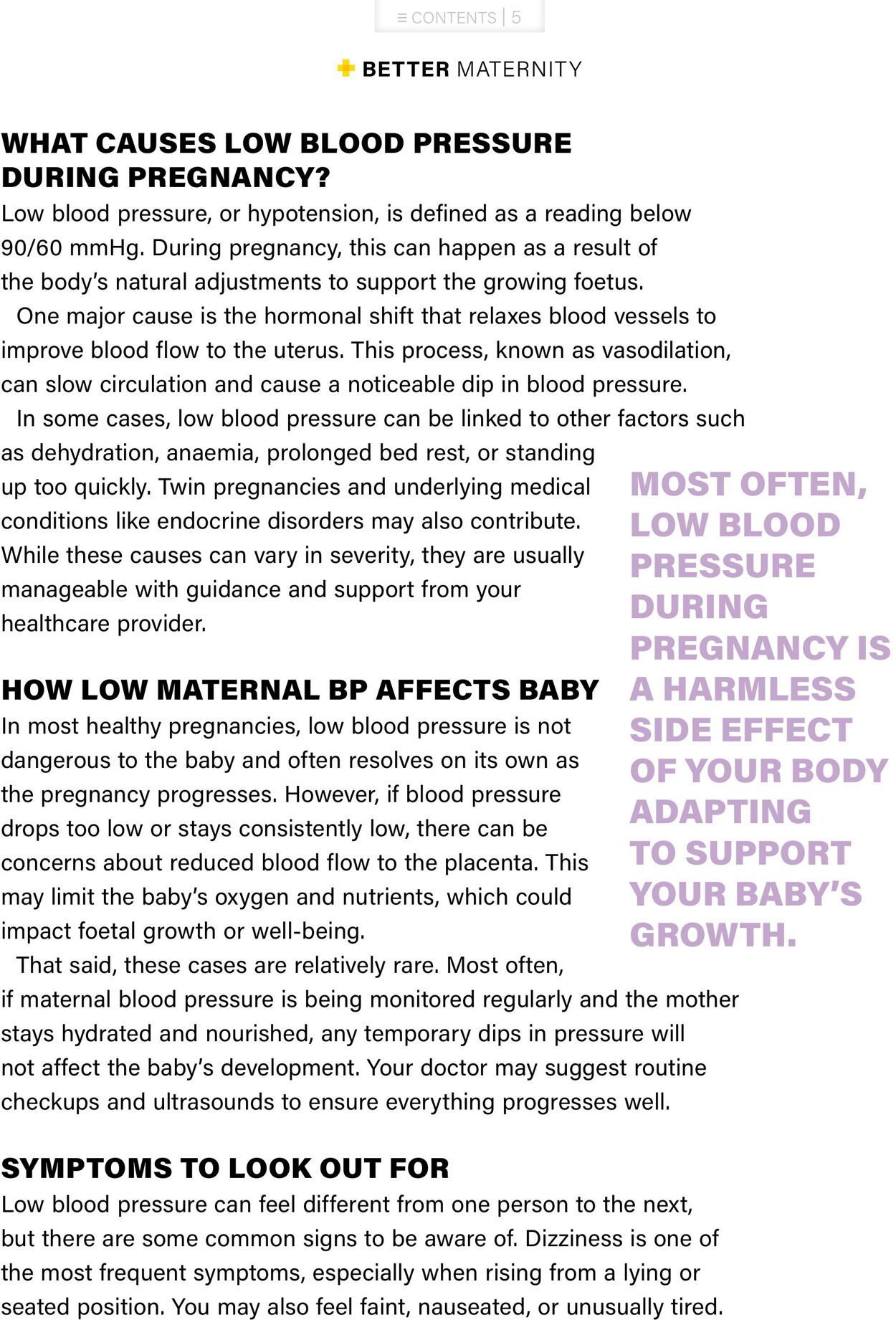
*» BETTER MATERNITY WHAT CAUSES LOW BLOOD PRESSURE DURING PREGNANCY? Low blood pressure, or hypotension, is defined as a reading below 90/60 mmHg. During pregnancy, this can happen as a result of the body's natural adjustments to support the growing foetus. One major cause is the hormonal shift that relaxes blood vessels to improve blood flow to the uterus. This process, known as vasodilation, can slow circulation and cause a noticeable dip in blood pressure. In some cases, low blood pressure can be linked to other factors such as dehydration, anaemia, prolonged bed rest, or standing up too quickly. Twin pregnancies and underlying medical conditions like endocrine disorders may also contribute. While these causes can vary in severity, they are usually manageable with guidance and support from your healthcare provider. HOW LOW MATERNAL BP AFFECTS BABY In most healthy pregnancies, low blood pressure is not dangerous to the baby and often resolves on its own as the pregnancy progresses. However, if blood pressure drops too low or stays consistently low, there can be concerns about reduced blood flow to the placenta. This may limit the baby's oxygen and nutrients, which could impact foetal growth or well-being. That said, these cases are relatively rare. Most often, if maternal blood pressure is being monitored regularly and the mother stays hydrated and nourished, any temporary dips in pressure will not affect the baby's development. Your doctor may suggest routine checkups and ultrasounds to ensure everything progresses well. SYMPTOMS TO LOOK OUT FOR Low blood pressure can feel different from one person to the next, but there are some common signs to be aware of. Dizziness is one of the most frequent symptoms, especially when rising from a lying or seated position. You may also feel faint, nauseated, or unusually tired.


Latest specials

Advertisement
*» BETTER MATERNITY WHAT CAUSES LOW BLOOD PRESSURE DURING PREGNANCY? Low blood pressure, or hypotension, is defined as a reading below 90/60 mmHg. During pregnancy, this can happen as a result of the body's natural adjustments to support the growing foetus. One major cause is the hormonal shift that relaxes blood vessels to improve blood flow to the uterus. This process, known as vasodilation, can slow circulation and cause a noticeable dip in blood pressure. In some cases, low blood pressure can be linked to other factors such as dehydration, anaemia, prolonged bed rest, or standing up too quickly. Twin pregnancies and underlying medical conditions like endocrine disorders may also contribute. While these causes can vary in severity, they are usually manageable with guidance and support from your healthcare provider. HOW LOW MATERNAL BP AFFECTS BABY In most healthy pregnancies, low blood pressure is not dangerous to the baby and often resolves on its own as the pregnancy progresses. However, if blood pressure drops too low or stays consistently low, there can be concerns about reduced blood flow to the placenta. This may limit the baby's oxygen and nutrients, which could impact foetal growth or well-being. That said, these cases are relatively rare. Most often, if maternal blood pressure is being monitored regularly and the mother stays hydrated and nourished, any temporary dips in pressure will not affect the baby's development. Your doctor may suggest routine checkups and ultrasounds to ensure everything progresses well. SYMPTOMS TO LOOK OUT FOR Low blood pressure can feel different from one person to the next, but there are some common signs to be aware of. Dizziness is one of the most frequent symptoms, especially when rising from a lying or seated position. You may also feel faint, nauseated, or unusually tired.

Advertisement
Advertisement

If you continue to browse this website, you accept the use of cookies.

Name Details