The query has to be between 2 and 50 characters

















Products in this catalogue
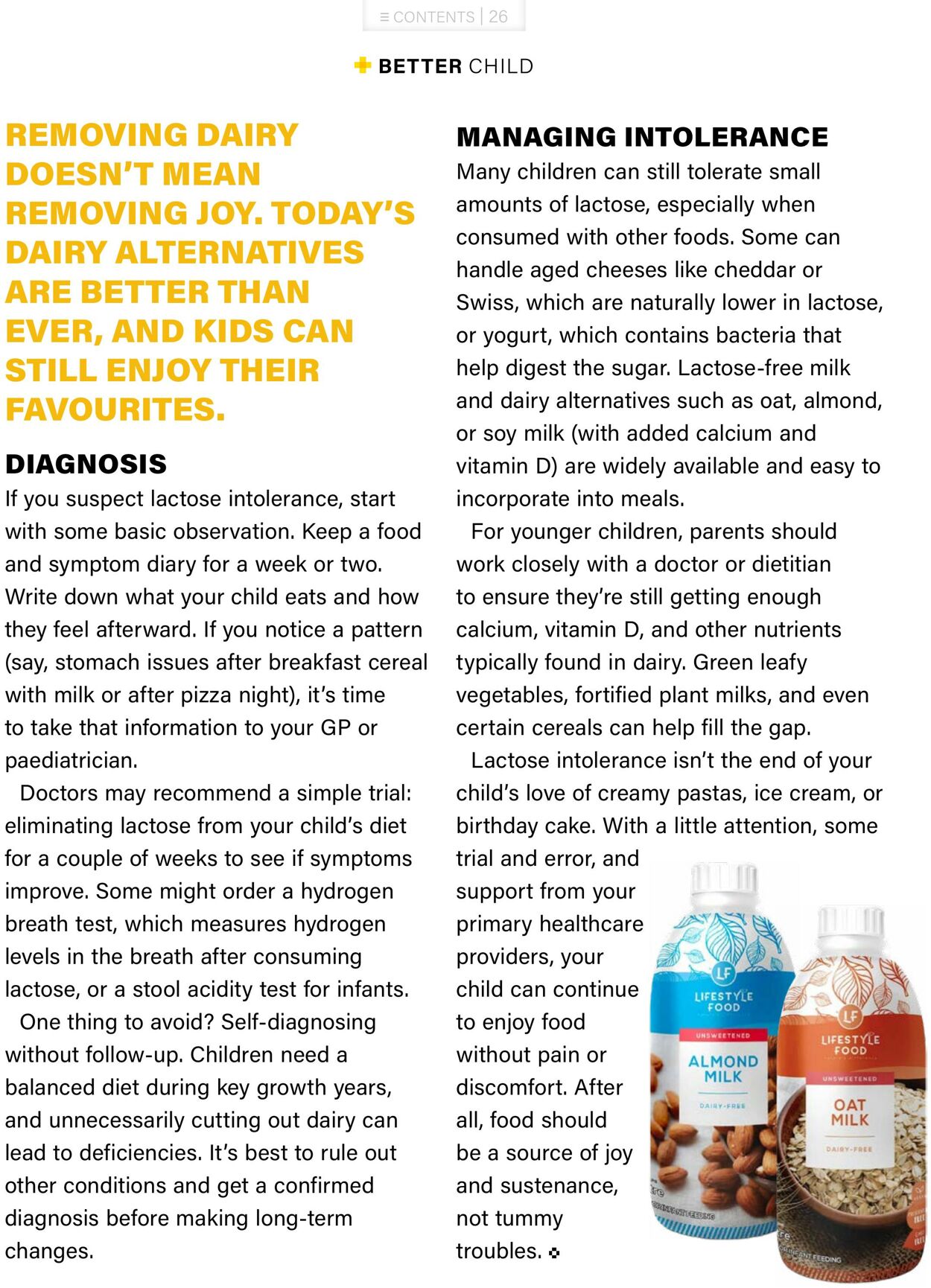
*» BETTER CHILD REMOVING DAIRY DOESN’T MEAN REMOVING JOY. TODAY’S DAIRY ALTERNATIVES ARE BETTER THAN EVER, AND KIDS CAN STILL ENJOY THEIR FAVOURITES. DIAGNOSIS If you suspect lactose intolerance, start with some basic observation. Keep a food and symptom diary for a week or two. Write down what your child eats and how they feel afterward. If you notice a pattern (say, stomach issues after breakfast cereal with milk or after pizza night), it's time to take that information to your GP or paediatrician. Doctors may recommend a simple trial: eliminating lactose from your child’s diet for a couple of weeks to see if symptoms improve. Some might order a hydrogen breath test, which measures hydrogen levels in the breath after consuming lactose, or a stool acidity test for infants. One thing to avoid? Self-diagnosing without follow-up. Children need a balanced diet during key growth years, and unnecessarily cutting out dairy can lead to deficiencies. It’s best to rule out other conditions and get a confirmed diagnosis before making long-term changes. MANAGING INTOLERANCE Many children can still tolerate small amounts of lactose, especially when consumed with other foods. Some can handle aged cheeses like cheddar or Swiss, which are naturally lower in lactose, or yogurt, which contains bacteria that help digest the sugar. Lactose-free milk and dairy alternatives such as oat, almond, or soy milk (with added calcium and vitamin D) are widely available and easy to incorporate into meals. For younger children, parents should work closely with a doctor or dietitian to ensure they're still getting enough calcium, vitamin D, and other nutrients typically found in dairy. Green leafy vegetables, fortified plant milks, and even certain cereals can help fill the gap. Lactose intolerance isn’t the end of your child's love of creamy pastas, ice cream, or birthday cake. With a little attention, some trial and error, and support from your primary healthcare providers, your child can continue to enjoy food without pain or discomfort. After all, food should be a source of joy and sustenance, § not tummy troubles. = ? ALMOND MILK











| Name | Details |
|---|