The query has to be between 2 and 50 characters

















Products in this catalogue
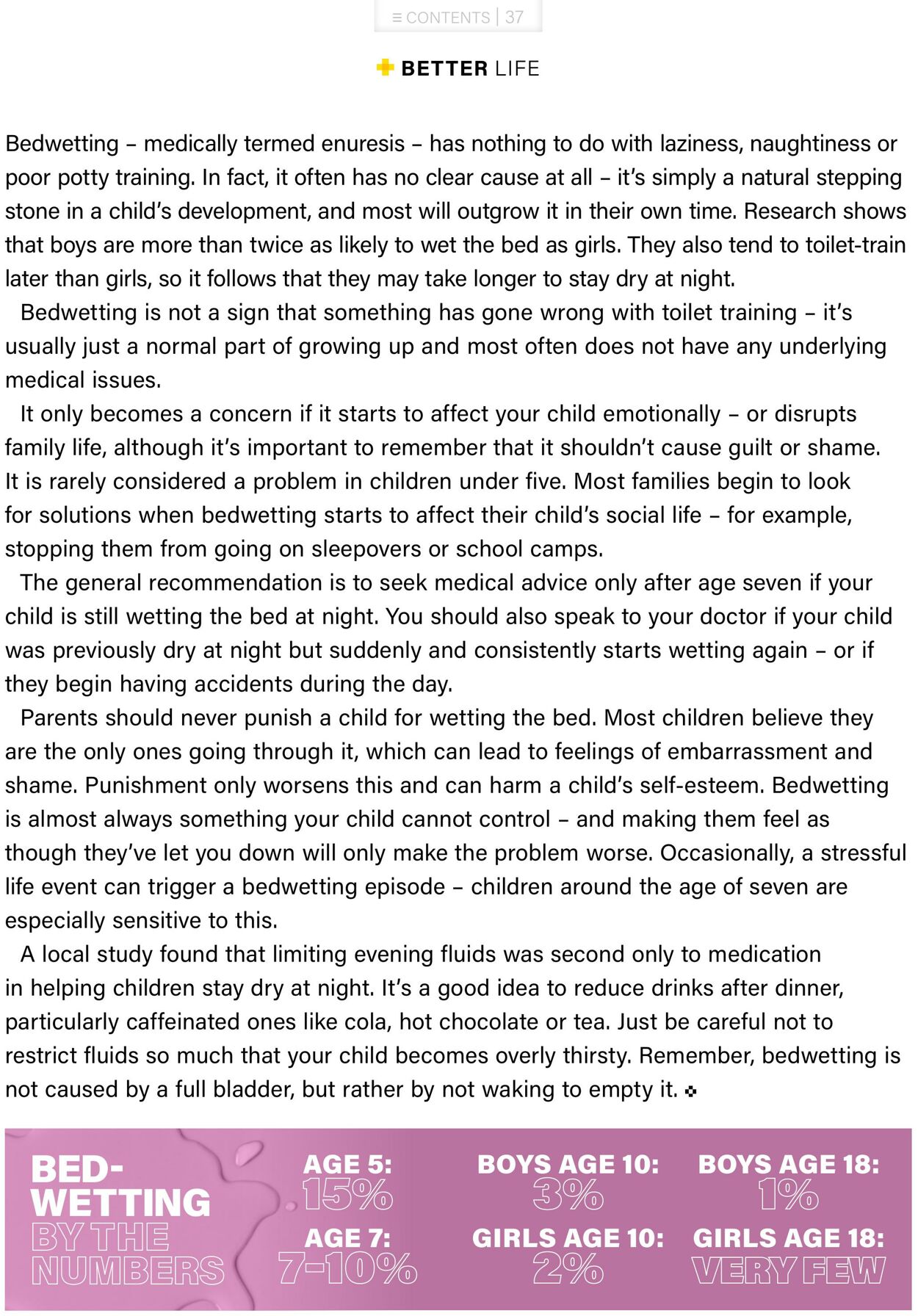
*» BETTER LIFE Bedwetting - medically termed enuresis - has nothing to do with laziness, naughtiness or poor potty training. In fact, it often has no clear cause at all - it's simply a natural stepping stone in a child’s development, and most will outgrow it in their own time. Research shows that boys are more than twice as likely to wet the bed as girls. They also tend to toilet-train later than girls, so it follows that they may take longer to stay dry at night. Bedwetting is not a sign that something has gone wrong with toilet training - it’s usually just a normal part of growing up and most often does not have any underlying medical issues. It only becomes a concern if it starts to affect your child emotionally - or disrupts family life, although it’s important to remember that it shouldn't cause guilt or shame. It is rarely considered a problem in children under five. Most families begin to look for solutions when bedwetting starts to affect their child's social life - for example, stopping them from going on sleepovers or school camps. The general recommendation is to seek medical advice only after age seven if your child is still wetting the bed at night. You should also speak to your doctor if your child was previously dry at night but suddenly and consistently starts wetting again - or if they begin having accidents during the day. Parents should never punish a child for wetting the bed. Most children believe they are the only ones going through it, which can lead to feelings of embarrassment and shame. Punishment only worsens this and can harm a child’s self-esteem. Bedwetting is almost always something your child cannot control - and making them feel as though they've let you down will only make the problem worse. Occasionally, a stressful life event can trigger a bedwetting episode - children around the age of seven are especially sensitive to this. A local study found that limiting evening fluids was second only to medication in helping children stay dry at night. It's a good idea to reduce drinks after dinner, particularly caffeinated ones like cola, hot chocolate or tea. Just be careful not to restrict fluids so much that your child becomes overly thirsty. Remember, bedwetting is not caused by a full bladder, but rather by not waking to empty it. = BED- AGE 5: BOYS AGE10: BOYS AGE 18: am Ce 15% BH eo) BYAnHE AGE 7: GIRLS AGE 10: GIRLS AGE 18: NUMBERS 7/-0O% @ WERVAEEV












| Name | Details |
|---|