The query has to be between 2 and 50 characters

Advertisement
Advertisement

Current special Baby City - Valid from 01.11 to 30.11 - Page nb 28

Advertisement
Advertisement
Advertisement
Advertisement
Special Baby City 01.11.2025 - 30.11.2025
Special Boxer - Atlyn Mall Liquor Grand Opening 22 May, 2026 - 7 Jun, 2026
Boxer - Atlyn Mall Liquor Grand Opening
22 May, 2026 - 7 Jun, 2026
Special Boxer - Atlyn Mall Liquor Grand Opening 22 May, 2026 - 7 Jun, 2026
Boxer - Atlyn Mall Liquor Grand Opening
22 May, 2026 - 7 Jun, 2026
Special Boxer - GP May ME Liquor Special Stores 25 May, 2026 - 7 Jun, 2026
Boxer - GP May ME Liquor Special Stores
25 May, 2026 - 7 Jun, 2026
Special Boxer - GP May ME Liquor Special Stores 25 May, 2026 - 7 Jun, 2026
Boxer - GP May ME Liquor Special Stores
25 May, 2026 - 7 Jun, 2026
See next flyer
Advertisement
Advertisement
Advertisement

Products in this catalogue

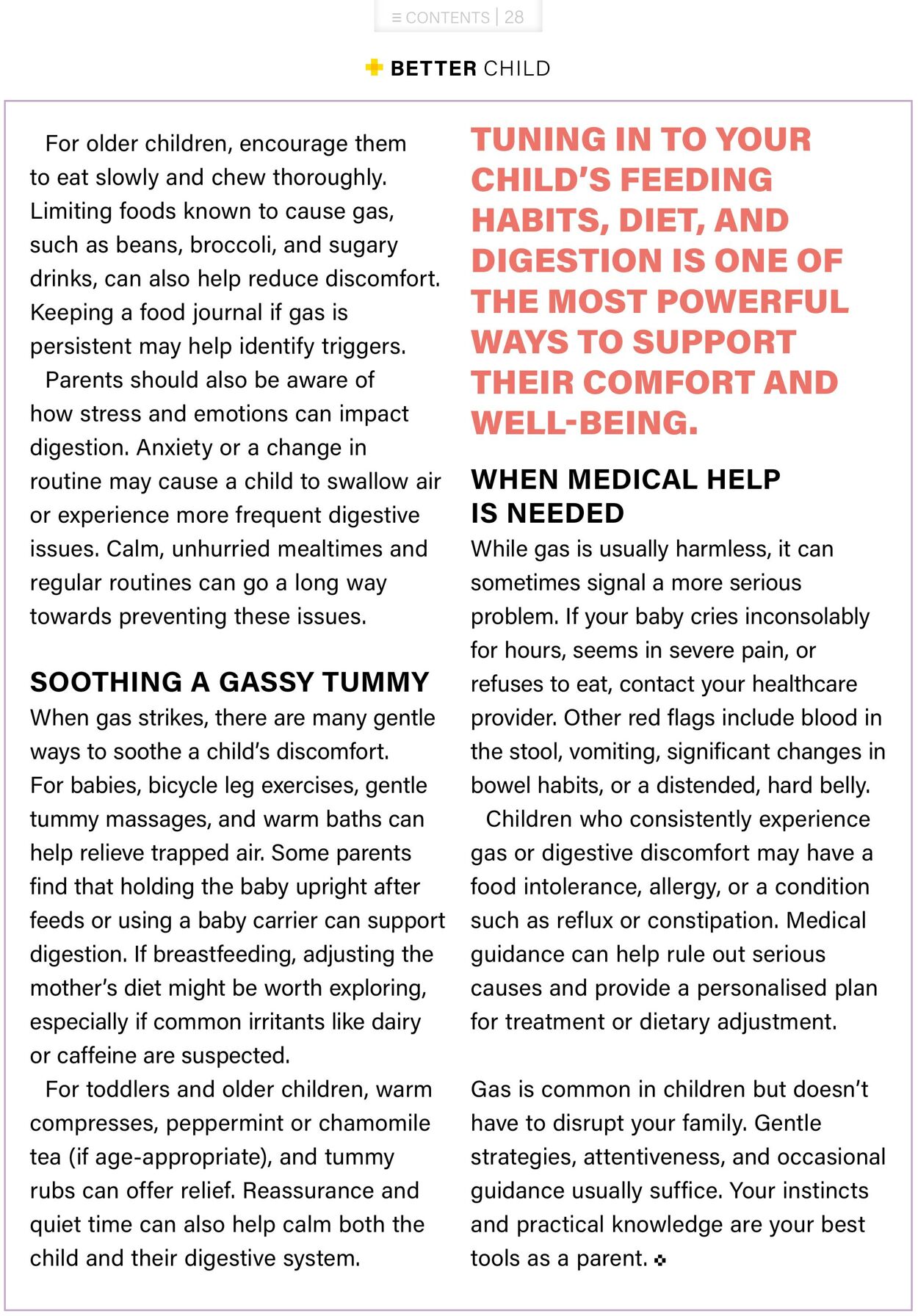
“+ BETTER CHILD For older children, encourage them to eat slowly and chew thoroughly. Limiting foods known to cause gas, such as beans, broccoli, and sugary drinks, can also help reduce discomfort. Keeping a food journal if gas is persistent may help identify triggers. Parents should also be aware of how stress and emotions can impact digestion. Anxiety or a change in routine may cause a child to swallow air or experience more frequent digestive issues. Calm, unhurried mealtimes and regular routines can go a long way towards preventing these issues. SOOTHING A GASSY TUMMY When gas strikes, there are many gentle ways to soothe a child's discomfort. For babies, bicycle leg exercises, gentle tummy massages, and warm baths can help relieve trapped air. Some parents find that holding the baby upright after feeds or using a baby carrier can support digestion. If breastfeeding, adjusting the mother's diet might be worth exploring, especially if common irritants like dairy or caffeine are suspected. For toddlers and older children, warm compresses, peppermint or chamomile tea (if age-appropriate), and tummy rubs can offer relief. Reassurance and quiet time can also help calm both the child and their digestive system. TUNING IN TO YOUR CHILD’S FEEDING HABITS, DIET, AND DIGESTION IS ONE OF THE MOST POWERFUL WAYS TO SUPPORT THEIR COMFORT AND WELL-BEING. WHEN MEDICAL HELP IS NEEDED While gas is usually harmless, it can sometimes signal a more serious problem. If your baby cries inconsolably for hours, seems in severe pain, or refuses to eat, contact your healthcare provider. Other red flags include blood in the stool, vomiting, significant changes in bowel habits, or a distended, hard belly. Children who consistently experience gas or digestive discomfort may have a food intolerance, allergy, or a condition such as reflux or constipation. Medical guidance can help rule out serious causes and provide a personalised plan for treatment or dietary adjustment. Gas is common in children but doesn’t have to disrupt your family. Gentle strategies, attentiveness, and occasional guidance usually suffice. Your instincts and practical knowledge are your best tools as a parent.


Latest specials

Advertisement
“+ BETTER CHILD For older children, encourage them to eat slowly and chew thoroughly. Limiting foods known to cause gas, such as beans, broccoli, and sugary drinks, can also help reduce discomfort. Keeping a food journal if gas is persistent may help identify triggers. Parents should also be aware of how stress and emotions can impact digestion. Anxiety or a change in routine may cause a child to swallow air or experience more frequent digestive issues. Calm, unhurried mealtimes and regular routines can go a long way towards preventing these issues. SOOTHING A GASSY TUMMY When gas strikes, there are many gentle ways to soothe a child's discomfort. For babies, bicycle leg exercises, gentle tummy massages, and warm baths can help relieve trapped air. Some parents find that holding the baby upright after feeds or using a baby carrier can support digestion. If breastfeeding, adjusting the mother's diet might be worth exploring, especially if common irritants like dairy or caffeine are suspected. For toddlers and older children, warm compresses, peppermint or chamomile tea (if age-appropriate), and tummy rubs can offer relief. Reassurance and quiet time can also help calm both the child and their digestive system. TUNING IN TO YOUR CHILD’S FEEDING HABITS, DIET, AND DIGESTION IS ONE OF THE MOST POWERFUL WAYS TO SUPPORT THEIR COMFORT AND WELL-BEING. WHEN MEDICAL HELP IS NEEDED While gas is usually harmless, it can sometimes signal a more serious problem. If your baby cries inconsolably for hours, seems in severe pain, or refuses to eat, contact your healthcare provider. Other red flags include blood in the stool, vomiting, significant changes in bowel habits, or a distended, hard belly. Children who consistently experience gas or digestive discomfort may have a food intolerance, allergy, or a condition such as reflux or constipation. Medical guidance can help rule out serious causes and provide a personalised plan for treatment or dietary adjustment. Gas is common in children but doesn’t have to disrupt your family. Gentle strategies, attentiveness, and occasional guidance usually suffice. Your instincts and practical knowledge are your best tools as a parent.

Advertisement
Advertisement

If you continue to browse this website, you accept the use of cookies.

Name Details