The query has to be between 2 and 50 characters
Advertisement
Advertisement

Current special Baby City - Valid from 01.11 to 30.11 - Page nb 24

Advertisement
Advertisement
Advertisement
Advertisement
Special Baby City 01.11.2025 - 30.11.2025
Special Boxer - GP May ME Liquor 25 May, 2026 - 7 Jun, 2026
Boxer - GP May ME Liquor
25 May, 2026 - 7 Jun, 2026
Special Boxer - Atlyn Mall Liquor Grand Opening 22 May, 2026 - 7 Jun, 2026
Boxer - Atlyn Mall Liquor Grand Opening
22 May, 2026 - 7 Jun, 2026
Special Boxer - GP May ME Special Stores 25 May, 2026 - 7 Jun, 2026
Boxer - GP May ME Special Stores
25 May, 2026 - 7 Jun, 2026
Special Boxer - Atlyn Mall Liquor Grand Opening 25 May, 2026 - 7 Jun, 2026
Boxer - Atlyn Mall Liquor Grand Opening
25 May, 2026 - 7 Jun, 2026
See next flyer
Advertisement
Advertisement
Advertisement

Products in this catalogue

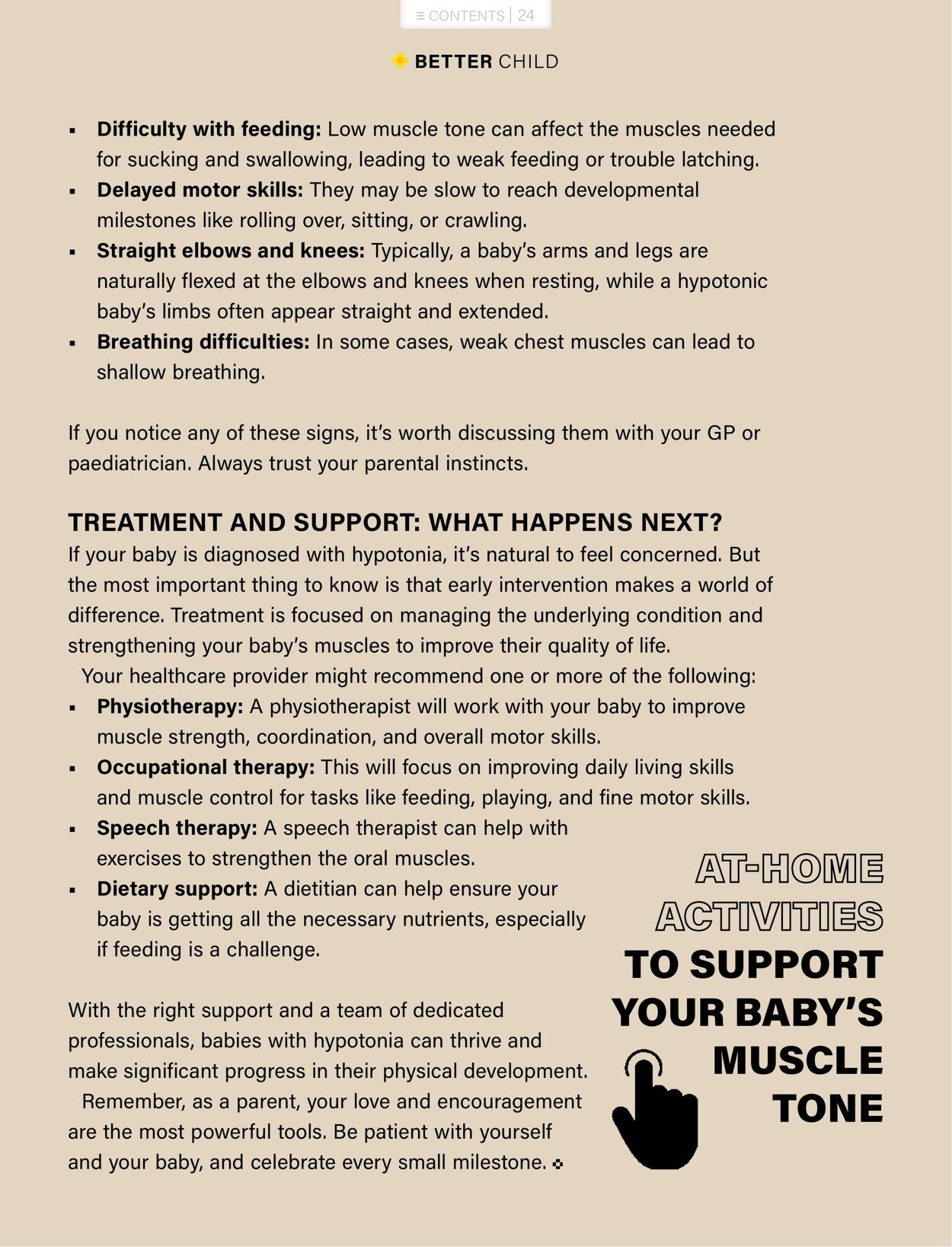
~ BETTER CHILD Difficulty with feeding: Low muscle tone can affect the muscles needed for sucking and swallowing, leading to weak feeding or trouble latching. Delayed motor skills: They may be slow to reach developmental milestones like rolling over, sitting, or crawling. Straight elbows and knees: Typically, a baby’s arms and legs are naturally flexed at the elbows and knees when resting, while a hypotonic baby’s limbs often appear straight and extended. Breathing difficulties: In some cases, weak chest muscles can lead to shallow breathing. If you notice any of these signs, it’s worth discussing them with your GP or paediatrician. Always trust your parental instincts. TREATMENT AND SUPPORT: WHAT HAPPENS NEXT? If your baby is diagnosed with hypotonia, it’s natural to feel concerned. But the most important thing to know is that early intervention makes a world of difference. Treatment is focused on managing the underlying condition and strengthening your baby’s muscles to improve their quality of life. With the right support and a team of dedicated Your healthcare provider might recommend one or more of the following: Physiotherapy: A physiotherapist will work with your baby to improve muscle strength, coordination, and overall motor skills. Occupational therapy: This will focus on improving daily living skills and muscle control for tasks like feeding, playing, and fine motor skills. Speech therapy: A speech therapist can help with exercises to strengthen the oral muscles. ATFHOME Dietary support: A dietitian can help ensure your poe) is getting all the necessary nutrients, especially AGTIWITIES if feeding is a challenge. To SU PPO RT YOUR BABY’S professionals, babies with hypotonia can thrive and make significant progress in their physical development. @) MUSCLE Remember, as a parent, your love and encouragement TONE are the most powerful tools. Be patient with yourself and your baby, and celebrate every small milestone. +


Latest specials

Advertisement
~ BETTER CHILD Difficulty with feeding: Low muscle tone can affect the muscles needed for sucking and swallowing, leading to weak feeding or trouble latching. Delayed motor skills: They may be slow to reach developmental milestones like rolling over, sitting, or crawling. Straight elbows and knees: Typically, a baby’s arms and legs are naturally flexed at the elbows and knees when resting, while a hypotonic baby’s limbs often appear straight and extended. Breathing difficulties: In some cases, weak chest muscles can lead to shallow breathing. If you notice any of these signs, it’s worth discussing them with your GP or paediatrician. Always trust your parental instincts. TREATMENT AND SUPPORT: WHAT HAPPENS NEXT? If your baby is diagnosed with hypotonia, it’s natural to feel concerned. But the most important thing to know is that early intervention makes a world of difference. Treatment is focused on managing the underlying condition and strengthening your baby’s muscles to improve their quality of life. With the right support and a team of dedicated Your healthcare provider might recommend one or more of the following: Physiotherapy: A physiotherapist will work with your baby to improve muscle strength, coordination, and overall motor skills. Occupational therapy: This will focus on improving daily living skills and muscle control for tasks like feeding, playing, and fine motor skills. Speech therapy: A speech therapist can help with exercises to strengthen the oral muscles. ATFHOME Dietary support: A dietitian can help ensure your poe) is getting all the necessary nutrients, especially AGTIWITIES if feeding is a challenge. To SU PPO RT YOUR BABY’S professionals, babies with hypotonia can thrive and make significant progress in their physical development. @) MUSCLE Remember, as a parent, your love and encouragement TONE are the most powerful tools. Be patient with yourself and your baby, and celebrate every small milestone. +

Advertisement
Advertisement

If you continue to browse this website, you accept the use of cookies.

Name Details