The query has to be between 2 and 50 characters

Advertisement
Advertisement

Current special Baby City - Valid from 01.10 to 31.10 - Page nb 29

Advertisement
Advertisement
Advertisement
Advertisement
Special Baby City 01.10.2025 - 31.10.2025
Special Boxer - Atlyn Mall Liquor Grand Opening 22 May, 2026 - 7 Jun, 2026
Boxer - Atlyn Mall Liquor Grand Opening
22 May, 2026 - 7 Jun, 2026
Special Boxer - GP May ME Special Stores 25 May, 2026 - 7 Jun, 2026
Boxer - GP May ME Special Stores
25 May, 2026 - 7 Jun, 2026
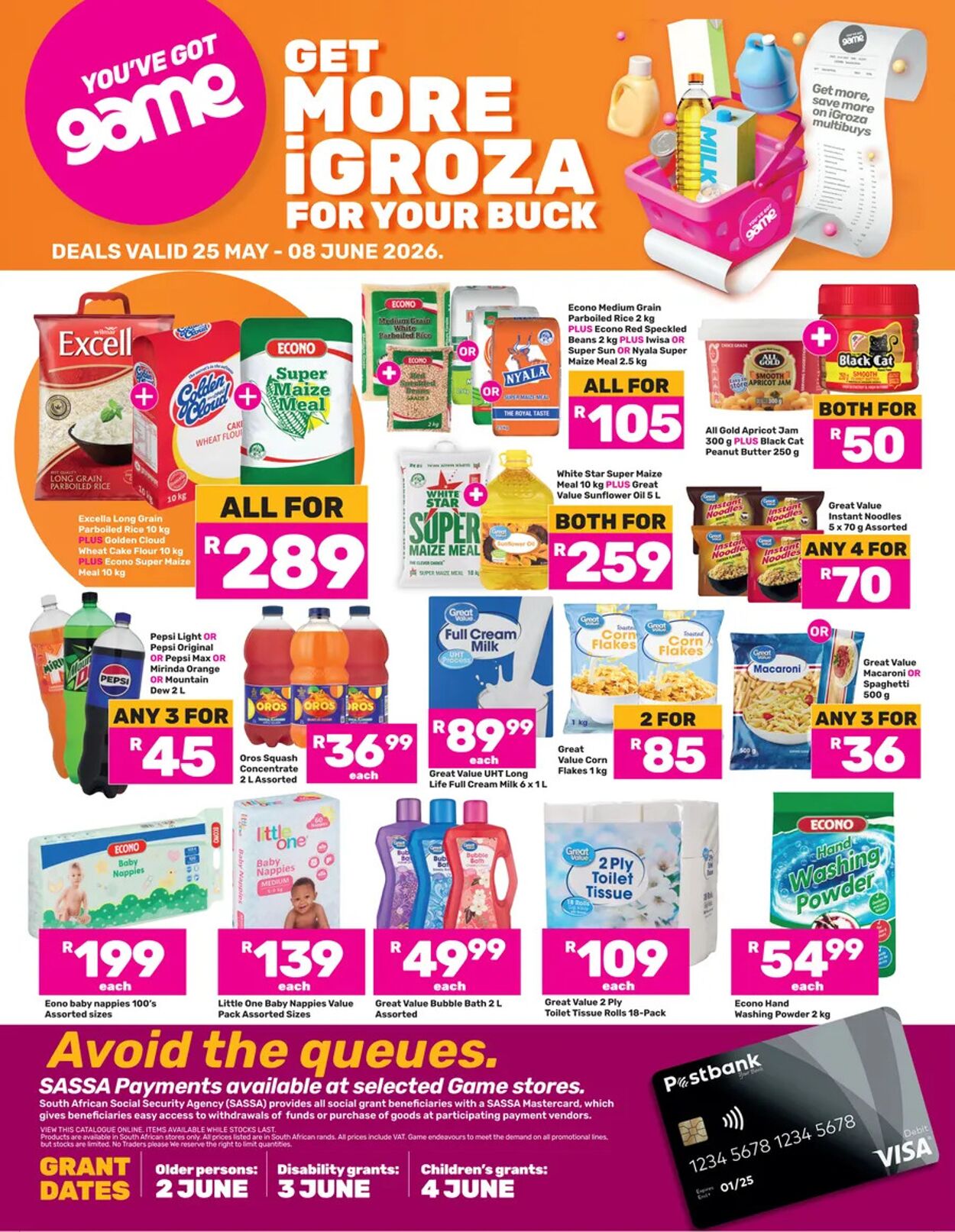
Special Game - Game SASSA : Get More iGroza For Your Buck (25 May - 08 June 2026) — www.guzzle.co.za 25 May, 2026 - 8 Jun, 2026
Game - Game SASSA : Get More iGroza For Your Buck (25 May - 08 June 2026) — www.guzzle.co.za
25 May, 2026 - 8 Jun, 2026
Special Game - Game Cellular : 56 Years In The Game (21 April - 06 June 2026) — www.guzzle.co.za 21 Apr, 2026 - 6 Jun, 2026
Game - Game Cellular : 56 Years In The Game (21 April - 06 June 2026) — www.guzzle.co.za
21 Apr, 2026 - 6 Jun, 2026
See next flyer
Advertisement
Advertisement
Advertisement

Products in this catalogue

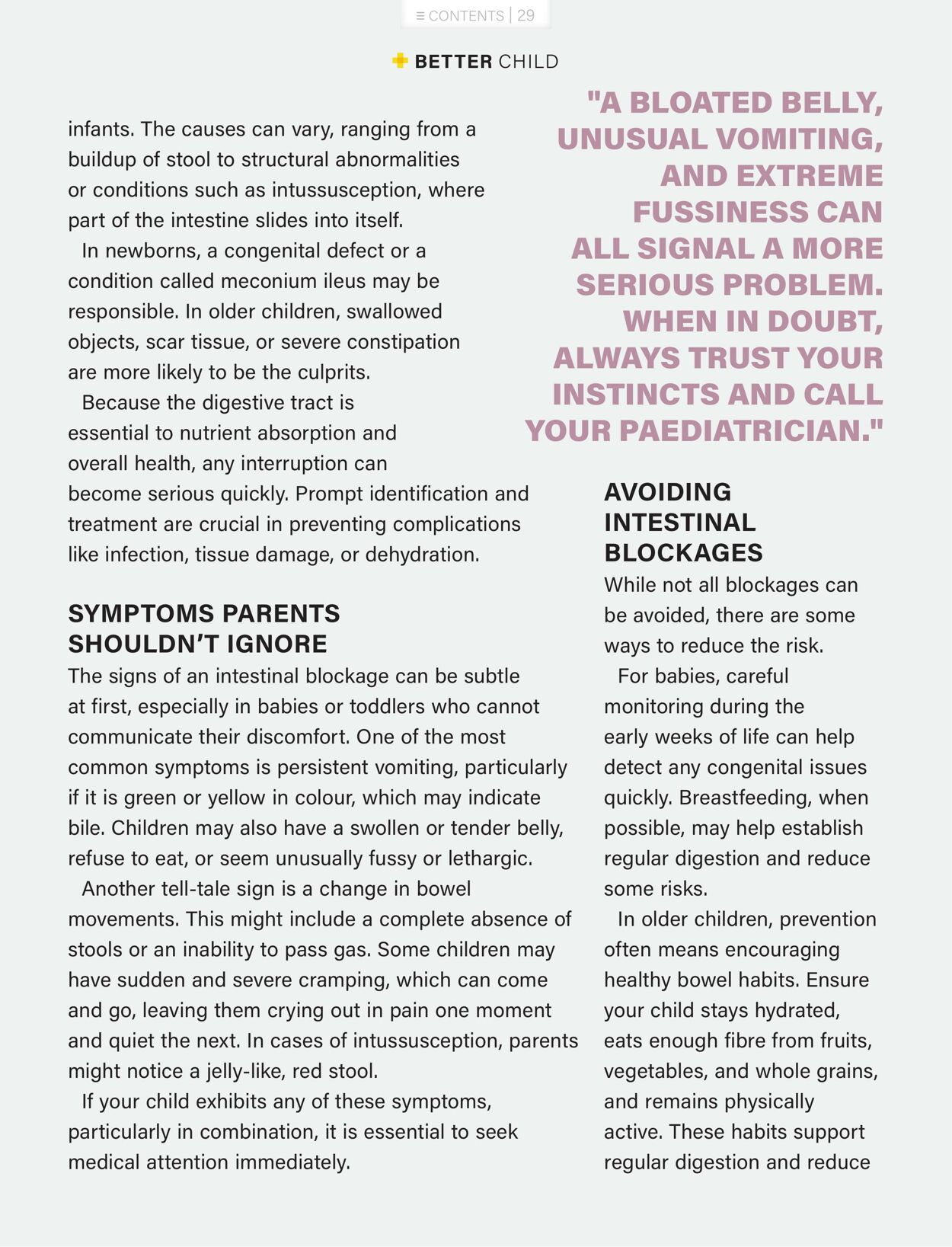
©» BETTER CHILD infants. The causes can vary, ranging from a buildup of stool to structural abnormalities or conditions such as intussusception, where part of the intestine slides into itself. In newborns, a congenital defect or a condition called meconium ileus may be responsible. In older children, swallowed objects, scar tissue, or severe constipation are more likely to be the culprits. Because the digestive tract is essential to nutrient absorption and overall health, any interruption can become serious quickly. Prompt identification and treatment are crucial in preventing complications like infection, tissue damage, or dehydration. SYMPTOMS PARENTS SHOULDN'T IGNORE The signs of an intestinal blockage can be subtle at first, especially in babies or toddlers who cannot communicate their discomfort. One of the most common symptoms is persistent vomiting, particularly if it is green or yellow in colour, which may indicate bile. Children may also have a swollen or tender belly, refuse to eat, or seem unusually fussy or lethargic. Another tell-tale sign is a change in bowel movements. This might include a complete absence of stools or an inability to pass gas. Some children may have sudden and severe cramping, which can come and go, leaving them crying out in pain one moment and quiet the next. In cases of intussusception, parents might notice a jelly-like, red stool. If your child exhibits any of these symptoms, particularly in combination, it is essential to seek medical attention immediately. "A BLOATED BELLY, UNUSUAL VOMITING, AND EXTREME FUSSINESS CAN ALL SIGNAL A MORE SERIOUS PROBLEM. WHEN IN DOUBT, ALWAYS TRUST YOUR INSTINCTS AND CALL YOUR PAEDIATRICIAN." AVOIDING INTESTINAL BLOCKAGES While not all blockages can be avoided, there are some ways to reduce the risk. For babies, careful monitoring during the early weeks of life can help detect any congenital issues quickly. Breastfeeding, when possible, may help establish regular digestion and reduce some risks. In older children, prevention often means encouraging healthy bowel habits. Ensure your child stays hydrated, eats enough fibre from fruits, vegetables, and whole grains, and remains physically active. These habits support regular digestion and reduce


Latest specials

Advertisement
©» BETTER CHILD infants. The causes can vary, ranging from a buildup of stool to structural abnormalities or conditions such as intussusception, where part of the intestine slides into itself. In newborns, a congenital defect or a condition called meconium ileus may be responsible. In older children, swallowed objects, scar tissue, or severe constipation are more likely to be the culprits. Because the digestive tract is essential to nutrient absorption and overall health, any interruption can become serious quickly. Prompt identification and treatment are crucial in preventing complications like infection, tissue damage, or dehydration. SYMPTOMS PARENTS SHOULDN'T IGNORE The signs of an intestinal blockage can be subtle at first, especially in babies or toddlers who cannot communicate their discomfort. One of the most common symptoms is persistent vomiting, particularly if it is green or yellow in colour, which may indicate bile. Children may also have a swollen or tender belly, refuse to eat, or seem unusually fussy or lethargic. Another tell-tale sign is a change in bowel movements. This might include a complete absence of stools or an inability to pass gas. Some children may have sudden and severe cramping, which can come and go, leaving them crying out in pain one moment and quiet the next. In cases of intussusception, parents might notice a jelly-like, red stool. If your child exhibits any of these symptoms, particularly in combination, it is essential to seek medical attention immediately. "A BLOATED BELLY, UNUSUAL VOMITING, AND EXTREME FUSSINESS CAN ALL SIGNAL A MORE SERIOUS PROBLEM. WHEN IN DOUBT, ALWAYS TRUST YOUR INSTINCTS AND CALL YOUR PAEDIATRICIAN." AVOIDING INTESTINAL BLOCKAGES While not all blockages can be avoided, there are some ways to reduce the risk. For babies, careful monitoring during the early weeks of life can help detect any congenital issues quickly. Breastfeeding, when possible, may help establish regular digestion and reduce some risks. In older children, prevention often means encouraging healthy bowel habits. Ensure your child stays hydrated, eats enough fibre from fruits, vegetables, and whole grains, and remains physically active. These habits support regular digestion and reduce

Advertisement
Advertisement

If you continue to browse this website, you accept the use of cookies.

Name Details