The query has to be between 2 and 50 characters
Advertisement
Advertisement

Current special Baby City - Valid from 01.09 to 30.09 - Page nb 31

Advertisement
Advertisement
Advertisement
Advertisement
Special Baby City 01.09.2025 - 30.09.2025
Special Boxer - Atlyn Mall Liquor Grand Opening 22 May, 2026 - 7 Jun, 2026
Boxer - Atlyn Mall Liquor Grand Opening
22 May, 2026 - 7 Jun, 2026
Special Boxer - Atlyn Mall Liquor Grand Opening 22 May, 2026 - 7 Jun, 2026
Boxer - Atlyn Mall Liquor Grand Opening
22 May, 2026 - 7 Jun, 2026
Special Boxer - Atlyn Mall Liquor Grand Opening 22 May, 2026 - 7 Jun, 2026
Boxer - Atlyn Mall Liquor Grand Opening
22 May, 2026 - 7 Jun, 2026
Special Boxer - Atlyn Mall Liquor Grand Opening 25 May, 2026 - 7 Jun, 2026
Boxer - Atlyn Mall Liquor Grand Opening
25 May, 2026 - 7 Jun, 2026
See next flyer
Advertisement
Advertisement
Advertisement

Products in this catalogue

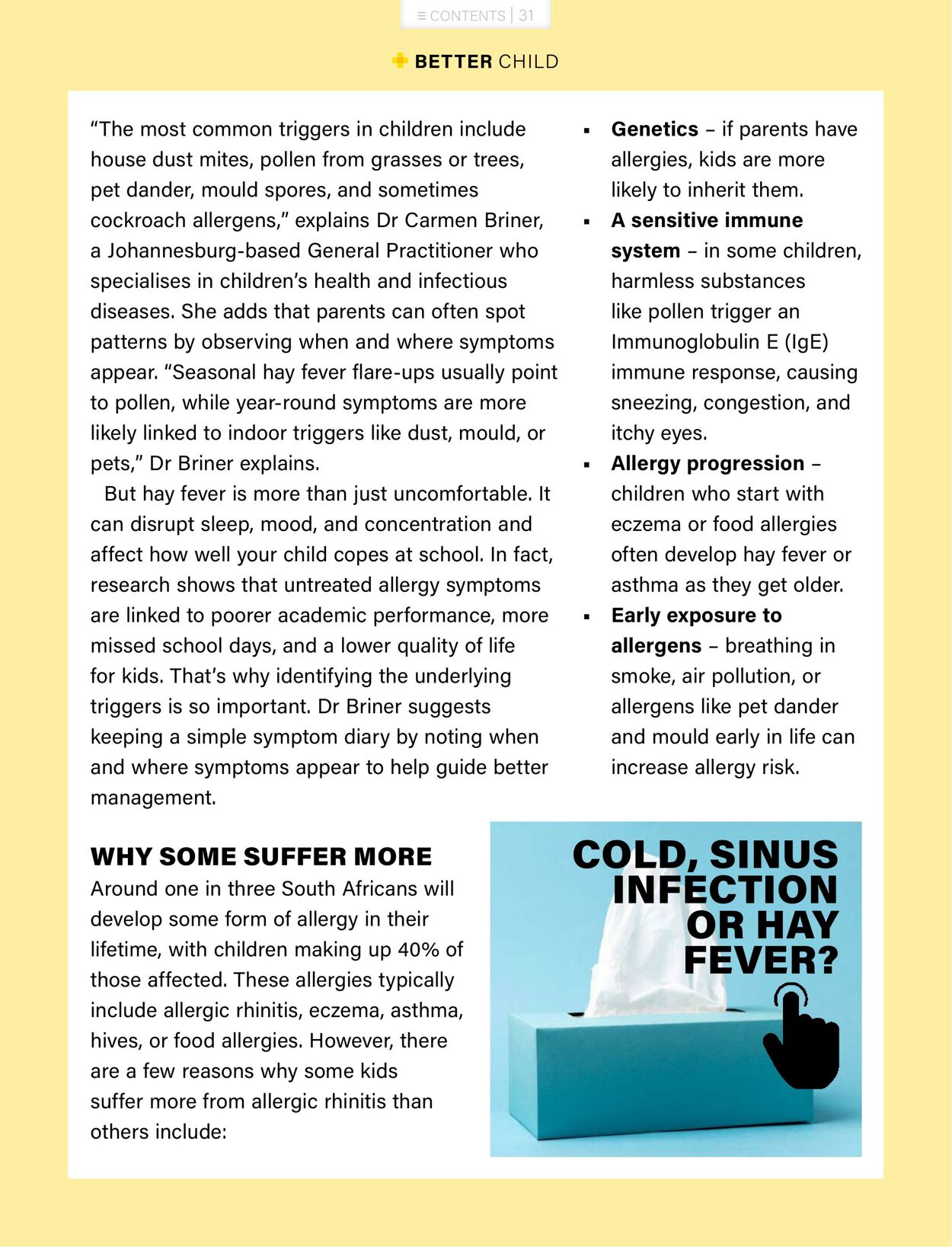
BETTER CHILD “The most common triggers in children include . house dust mites, pollen from grasses or trees, pet dander, mould spores, and sometimes cockroach allergens,” explains Dr Carmen Briner, . a Johannesburg-based General Practitioner who specialises in children’s health and infectious diseases. She adds that parents can often spot patterns by observing when and where symptoms appear. “Seasonal hay fever flare-ups usually point to pollen, while year-round symptoms are more likely linked to indoor triggers like dust, mould, or pets,” Dr Briner explains. . But hay fever is more than just uncomfortable. It can disrupt sleep, mood, and concentration and affect how well your child copes at school. In fact, research shows that untreated allergy symptoms are linked to poorer academic performance, more = missed school days, and a lower quality of life for kids. That's why identifying the underlying triggers is so important. Dr Briner suggests keeping a simple symptom diary by noting when and where symptoms appear to help guide better management. WHY SOME SUFFER MORE Around one in three South Africans will develop some form of allergy in their lifetime, with children making up 40% of those affected. These allergies typically include allergic rhinitis, eczema, asthma, hives, or food allergies. However, there are a few reasons why some kids suffer more from allergic rhinitis than others include: Genetics - if parents have allergies, kids are more likely to inherit them. A sensitive immune system - in some children, harmless substances like pollen trigger an Immunoglobulin E (IgE) immune response, causing sneezing, congestion, and itchy eyes. Allergy progression - children who start with eczema or food allergies often develop hay fever or asthma as they get older. Early exposure to allergens - breathing in smoke, air pollution, or allergens like pet dander and mould early in life can increase allergy risk.


Latest specials

Advertisement
BETTER CHILD “The most common triggers in children include . house dust mites, pollen from grasses or trees, pet dander, mould spores, and sometimes cockroach allergens,” explains Dr Carmen Briner, . a Johannesburg-based General Practitioner who specialises in children’s health and infectious diseases. She adds that parents can often spot patterns by observing when and where symptoms appear. “Seasonal hay fever flare-ups usually point to pollen, while year-round symptoms are more likely linked to indoor triggers like dust, mould, or pets,” Dr Briner explains. . But hay fever is more than just uncomfortable. It can disrupt sleep, mood, and concentration and affect how well your child copes at school. In fact, research shows that untreated allergy symptoms are linked to poorer academic performance, more = missed school days, and a lower quality of life for kids. That's why identifying the underlying triggers is so important. Dr Briner suggests keeping a simple symptom diary by noting when and where symptoms appear to help guide better management. WHY SOME SUFFER MORE Around one in three South Africans will develop some form of allergy in their lifetime, with children making up 40% of those affected. These allergies typically include allergic rhinitis, eczema, asthma, hives, or food allergies. However, there are a few reasons why some kids suffer more from allergic rhinitis than others include: Genetics - if parents have allergies, kids are more likely to inherit them. A sensitive immune system - in some children, harmless substances like pollen trigger an Immunoglobulin E (IgE) immune response, causing sneezing, congestion, and itchy eyes. Allergy progression - children who start with eczema or food allergies often develop hay fever or asthma as they get older. Early exposure to allergens - breathing in smoke, air pollution, or allergens like pet dander and mould early in life can increase allergy risk.

Advertisement
Advertisement

If you continue to browse this website, you accept the use of cookies.

Name Details