The query has to be between 2 and 50 characters










Products in this catalogue
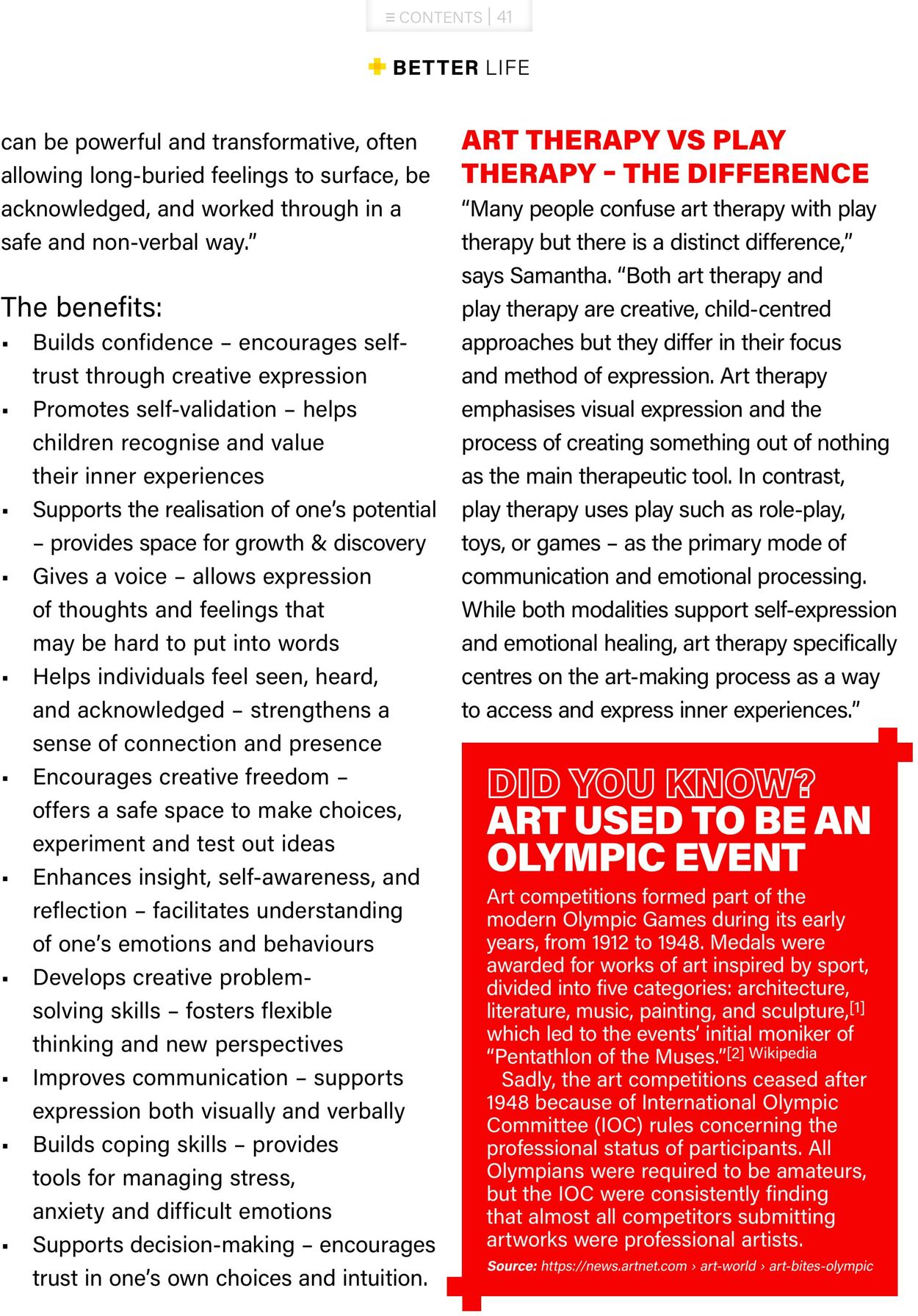
*» BETTER LIFE can be powerful and transformative, often allowing long-buried feelings to surface, be acknowledged, and worked through in a safe and non-verbal way.” The benefits: « Builds confidence - encourages self- trust through creative expression « Promotes self-validation - helps children recognise and value their inner experiences Supports the realisation of one's potential - provides space for growth & discovery Gives a voice - allows expression of thoughts and feelings that may be hard to put into words Helps individuals feel seen, heard, and acknowledged - strengthens a sense of connection and presence « Encourages creative freedom - offers a safe space to make choices, experiment and test out ideas Enhances insight, self-awareness, and reflection - facilitates understanding of one’s emotions and behaviours « Develops creative problem- solving skills - fosters flexible thinking and new perspectives Improves communication - supports expression both visually and verbally Builds coping skills - provides tools for managing stress, anxiety and difficult emotions « Supports decision-making - encourages trust in one’s own choices and intuition. ART THERAPY VS PLAY THERAPY - THE DIFFERENCE “Many people confuse art therapy with play therapy but there is a distinct difference,” says Samantha. “Both art therapy and play therapy are creative, child-centred approaches but they differ in their focus and method of expression. Art therapy emphasises visual expression and the process of creating something out of nothing as the main therapeutic tool. In contrast, play therapy uses play such as role-play, toys, or games - as the primary mode of communication and emotional processing. While both modalities support self-expression and emotional healing, art therapy specifically centres on the art-making process as a way to access and express inner experiences.” DID YOU KNOW? ART USED TO BE AN OLYMPIC EVENT Art competitions formed part of the modern Olympic Games during its early years, from 1912 to 1948. Medals were awarded for works of art inspired by sport, divided into five categories: architecture, literature, music, painting, and sculpture, [1] which led to the events’ initial moniker of “Pentathlon of the Muses,"[2] Wikipedia Sadly, the art competitions ceased after 1948 because of International Olympic Committee (IOC) rules concerning the professional status of participants. All Olympians were required to be amateurs, but the IOC were consistently finding that almost all competitors submitting artworks were professional artists. Source: https://news.artnet.com > art-world > art-bites-olympic












| Name | Details |
|---|