The query has to be between 2 and 50 characters

Advertisement
Advertisement

Current special Baby City - Valid from 22.08 to 22.09 - Page nb 19

Advertisement
Advertisement
Advertisement
Advertisement
Special Baby City 22.08.2025 - 22.09.2025
Special Boxer - Atlyn Mall Liquor Grand Opening 22 May, 2026 - 7 Jun, 2026
Boxer - Atlyn Mall Liquor Grand Opening
22 May, 2026 - 7 Jun, 2026
Special Boxer - GP May ME Liquor 25 May, 2026 - 7 Jun, 2026
Boxer - GP May ME Liquor
25 May, 2026 - 7 Jun, 2026
Special Boxer - Atlyn Mall Liquor Grand Opening 22 May, 2026 - 7 Jun, 2026
Boxer - Atlyn Mall Liquor Grand Opening
22 May, 2026 - 7 Jun, 2026
Special Boxer - GP May ME Special Stores 25 May, 2026 - 7 Jun, 2026
Boxer - GP May ME Special Stores
25 May, 2026 - 7 Jun, 2026
See next flyer
Advertisement
Advertisement
Advertisement

Products in this catalogue

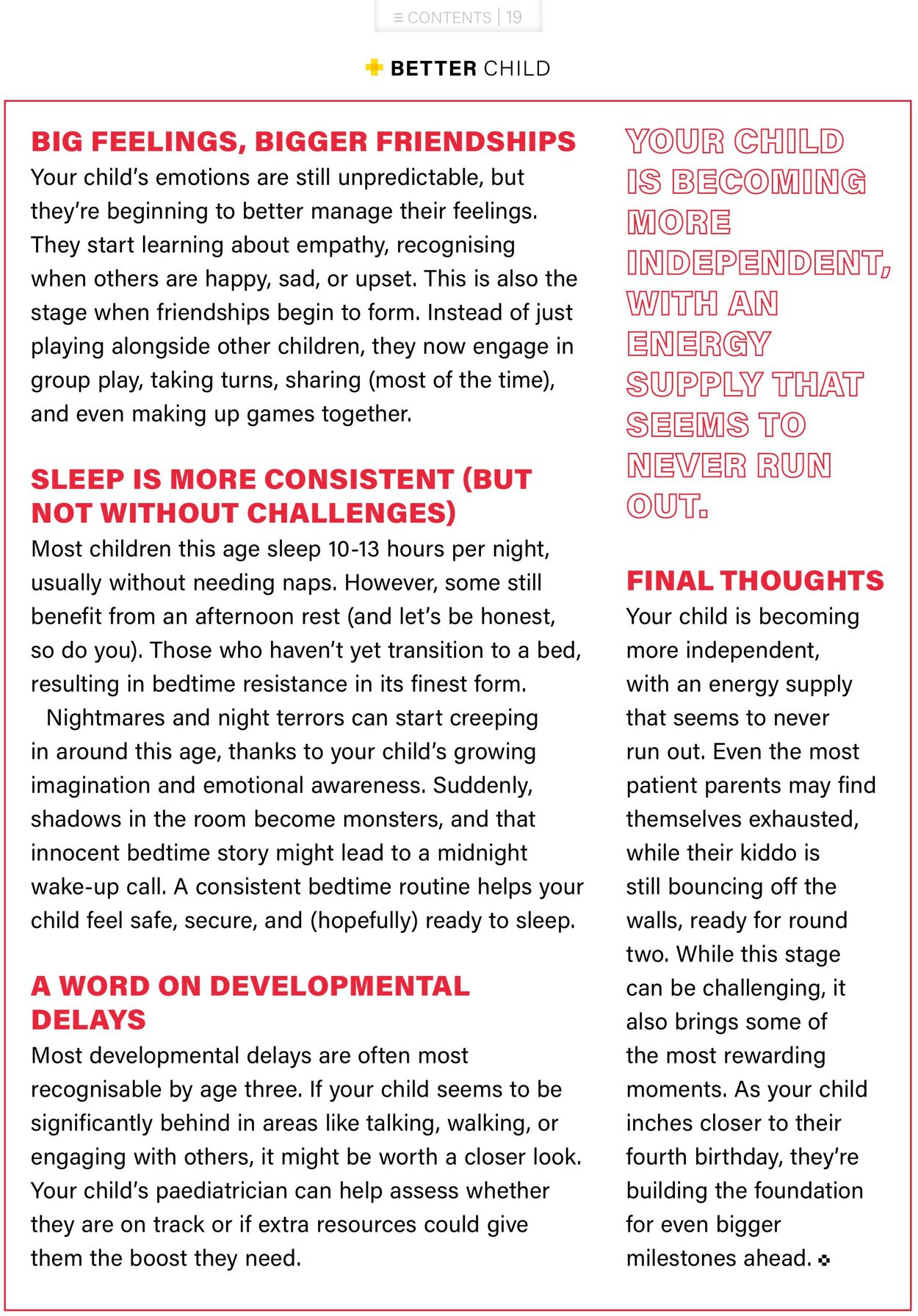
“+ BETTER CHILD BIG FEELINGS, BIGGER FRIENDSHIPS Your child's emotions are still unpredictable, but they're beginning to better manage their feelings. They start learning about empathy, recognising when others are happy, sad, or upset. This is also the stage when friendships begin to form. Instead of just playing alongside other children, they now engage in group play, taking turns, sharing (most of the time), and even making up games together. SLEEP IS MORE CONSISTENT (BUT NOT WITHOUT CHALLENGES) Most children this age sleep 10-13 hours per night, usually without needing naps. However, some still benefit from an afternoon rest (and let’s be honest, so do you). Those who haven't yet transition to a bed, resulting in bedtime resistance in its finest form. Nightmares and night terrors can start creeping in around this age, thanks to your child’s growing imagination and emotional awareness. Suddenly, shadows in the room become monsters, and that innocent bedtime story might lead to a midnight wake-up call. A consistent bedtime routine helps your child feel safe, secure, and (hopefully) ready to sleep. A WORD ON DEVELOPMENTAL DELAYS Most developmental delays are often most recognisable by age three. If your child seems to be significantly behind in areas like talking, walking, or engaging with others, it might be worth a closer look. Your child's paediatrician can help assess whether they are on track or if extra resources could give them the boost they need. YOUR CHILD IS BECOMING MORE INDEPENDENT, WITh] AN ENERGY SUPPLY THAT SEEMS TO NEVER RUN OUT. FINAL THOUGHTS Your child is becoming more independent, with an energy supply that seems to never run out. Even the most patient parents may find themselves exhausted, while their kiddo is still bouncing off the walls, ready for round two. While this stage can be challenging, it also brings some of the most rewarding moments. As your child inches closer to their fourth birthday, they're building the foundation for even bigger milestones ahead. =


Latest specials

Advertisement
“+ BETTER CHILD BIG FEELINGS, BIGGER FRIENDSHIPS Your child's emotions are still unpredictable, but they're beginning to better manage their feelings. They start learning about empathy, recognising when others are happy, sad, or upset. This is also the stage when friendships begin to form. Instead of just playing alongside other children, they now engage in group play, taking turns, sharing (most of the time), and even making up games together. SLEEP IS MORE CONSISTENT (BUT NOT WITHOUT CHALLENGES) Most children this age sleep 10-13 hours per night, usually without needing naps. However, some still benefit from an afternoon rest (and let’s be honest, so do you). Those who haven't yet transition to a bed, resulting in bedtime resistance in its finest form. Nightmares and night terrors can start creeping in around this age, thanks to your child’s growing imagination and emotional awareness. Suddenly, shadows in the room become monsters, and that innocent bedtime story might lead to a midnight wake-up call. A consistent bedtime routine helps your child feel safe, secure, and (hopefully) ready to sleep. A WORD ON DEVELOPMENTAL DELAYS Most developmental delays are often most recognisable by age three. If your child seems to be significantly behind in areas like talking, walking, or engaging with others, it might be worth a closer look. Your child's paediatrician can help assess whether they are on track or if extra resources could give them the boost they need. YOUR CHILD IS BECOMING MORE INDEPENDENT, WITh] AN ENERGY SUPPLY THAT SEEMS TO NEVER RUN OUT. FINAL THOUGHTS Your child is becoming more independent, with an energy supply that seems to never run out. Even the most patient parents may find themselves exhausted, while their kiddo is still bouncing off the walls, ready for round two. While this stage can be challenging, it also brings some of the most rewarding moments. As your child inches closer to their fourth birthday, they're building the foundation for even bigger milestones ahead. =

Advertisement
Advertisement

If you continue to browse this website, you accept the use of cookies.

Name Details