The query has to be between 2 and 50 characters

Advertisement
Advertisement

Current special Baby City - Valid from 01.07 to 31.07 - Page nb 29

Advertisement
Advertisement
Advertisement
Advertisement
Special Baby City 01.07.2025 - 31.07.2025
Special Boxer - Atlyn Mall Liquor Grand Opening 22 May, 2026 - 7 Jun, 2026
Boxer - Atlyn Mall Liquor Grand Opening
22 May, 2026 - 7 Jun, 2026
Special Boxer - GP May ME Liquor 25 May, 2026 - 7 Jun, 2026
Boxer - GP May ME Liquor
25 May, 2026 - 7 Jun, 2026
Special Boxer - Atlyn Mall Liquor Grand Opening 25 May, 2026 - 7 Jun, 2026
Boxer - Atlyn Mall Liquor Grand Opening
25 May, 2026 - 7 Jun, 2026
Special Boxer - Atlyn Mall Liquor Grand Opening 22 May, 2026 - 7 Jun, 2026
Boxer - Atlyn Mall Liquor Grand Opening
22 May, 2026 - 7 Jun, 2026
See next flyer
Advertisement
Advertisement
Advertisement

Products in this catalogue

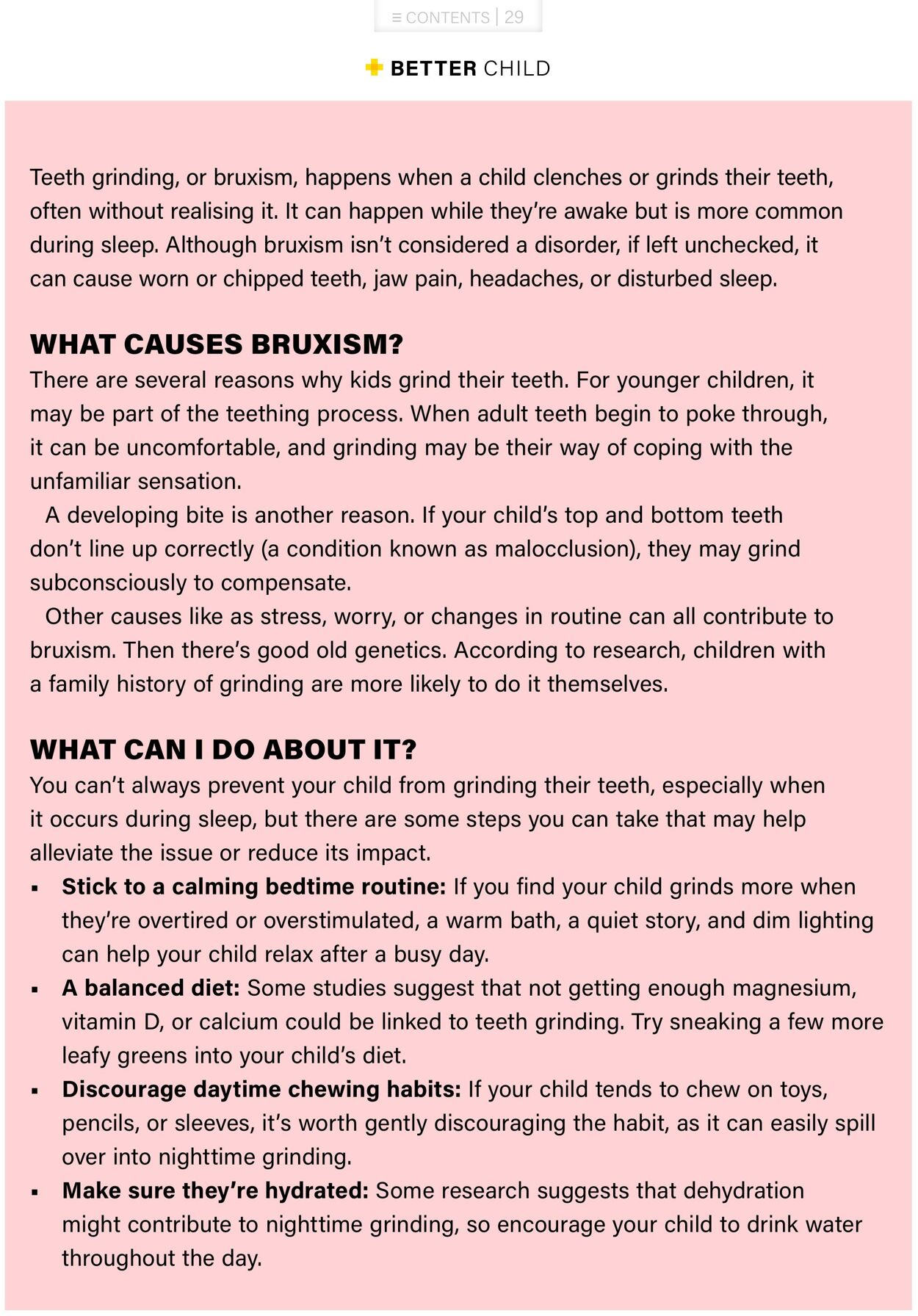
“+ BETTER CHILD Teeth grinding, or bruxism, happens when a child clenches or grinds their teeth, often without realising it. It can happen while they’re awake but is more common during sleep. Although bruxism isn’t considered a disorder, if left unchecked, it can cause worn or chipped teeth, jaw pain, headaches, or disturbed sleep. WHAT CAUSES BRUXISM? There are several reasons why kids grind their teeth. For younger children, it may be part of the teething process. When adult teeth begin to poke through, it can be uncomfortable, and grinding may be their way of coping with the unfamiliar sensation. A developing bite is another reason. If your child’s top and bottom teeth don't line up correctly (a condition known as malocclusion), they may grind subconsciously to compensate. Other causes like as stress, worry, or changes in routine can all contribute to bruxism. Then there’s good old genetics. According to research, children with a family history of grinding are more likely to do it themselves. WHAT CAN I DO ABOUT IT? You can't always prevent your child from grinding their teeth, especially when it occurs during sleep, but there are some steps you can take that may help alleviate the issue or reduce its impact. » Stick to a calming bedtime routine: If you find your child grinds more when they’re overtired or overstimulated, a warm bath, a quiet story, and dim lighting can help your child relax after a busy day. » A balanced diet: Some studies suggest that not getting enough magnesium, vitamin D, or calcium could be linked to teeth grinding. Try sneaking a few more leafy greens into your child's diet. » Discourage daytime chewing habits: If your child tends to chew on toys, pencils, or sleeves, it's worth gently discouraging the habit, as it can easily spill over into nighttime grinding. » Make sure they’re hydrated: Some research suggests that dehydration might contribute to nighttime grinding, so encourage your child to drink water throughout the day.


Latest specials

Advertisement
“+ BETTER CHILD Teeth grinding, or bruxism, happens when a child clenches or grinds their teeth, often without realising it. It can happen while they’re awake but is more common during sleep. Although bruxism isn’t considered a disorder, if left unchecked, it can cause worn or chipped teeth, jaw pain, headaches, or disturbed sleep. WHAT CAUSES BRUXISM? There are several reasons why kids grind their teeth. For younger children, it may be part of the teething process. When adult teeth begin to poke through, it can be uncomfortable, and grinding may be their way of coping with the unfamiliar sensation. A developing bite is another reason. If your child’s top and bottom teeth don't line up correctly (a condition known as malocclusion), they may grind subconsciously to compensate. Other causes like as stress, worry, or changes in routine can all contribute to bruxism. Then there’s good old genetics. According to research, children with a family history of grinding are more likely to do it themselves. WHAT CAN I DO ABOUT IT? You can't always prevent your child from grinding their teeth, especially when it occurs during sleep, but there are some steps you can take that may help alleviate the issue or reduce its impact. » Stick to a calming bedtime routine: If you find your child grinds more when they’re overtired or overstimulated, a warm bath, a quiet story, and dim lighting can help your child relax after a busy day. » A balanced diet: Some studies suggest that not getting enough magnesium, vitamin D, or calcium could be linked to teeth grinding. Try sneaking a few more leafy greens into your child's diet. » Discourage daytime chewing habits: If your child tends to chew on toys, pencils, or sleeves, it's worth gently discouraging the habit, as it can easily spill over into nighttime grinding. » Make sure they’re hydrated: Some research suggests that dehydration might contribute to nighttime grinding, so encourage your child to drink water throughout the day.

Advertisement
Advertisement

If you continue to browse this website, you accept the use of cookies.

Name Details