The query has to be between 2 and 50 characters











Products in this catalogue
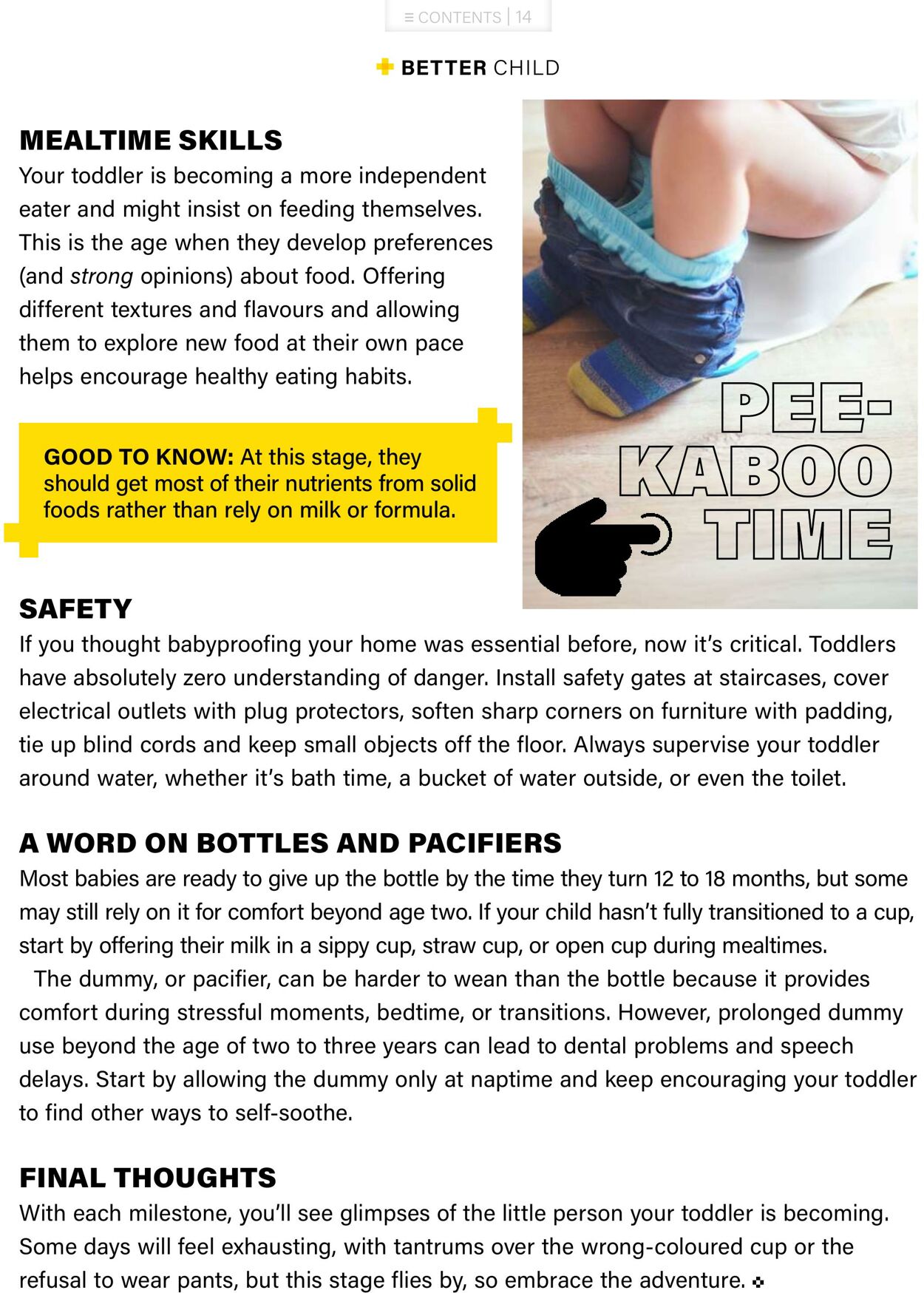
“© BETTER CHILD MEALTIME SKILLS Your toddler is becoming a more independent eater and might insist on feeding themselves. This is the age when they develop preferences (and strong opinions) about food. Offering different textures and flavours and allowing them to explore new food at their own pace helps encourage healthy eating habits. aes @ vue If you thought babyproofing your home was essential before, now it’s critical. Toddlers have absolutely zero understanding of danger. Install safety gates at staircases, cover electrical outlets with plug protectors, soften sharp corners on furniture with padding, tie up blind cords and keep small objects off the floor. Always supervise your toddler around water, whether it’s bath time, a bucket of water outside, or even the toilet. REE: A WORD ON BOTTLES AND PACIFIERS Most babies are ready to give up the bottle by the time they turn 12 to 18 months, but some may still rely on it for comfort beyond age two. If your child hasn't fully transitioned to a cup, start by offering their milk in a sippy cup, straw cup, or open cup during mealtimes. The dummy, or pacifier, can be harder to wean than the bottle because it provides comfort during stressful moments, bedtime, or transitions. However, prolonged dummy use beyond the age of two to three years can lead to dental problems and speech delays. Start by allowing the dummy only at naptime and keep encouraging your toddler to find other ways to self-soothe. FINAL THOUGHTS With each milestone, you'll see glimpses of the little person your toddler is becoming. Some days will feel exhausting, with tantrums over the wrong-coloured cup or the refusal to wear pants, but this stage flies by, so embrace the adventure, =












| Name | Details |
|---|